What is the JEPX Spot Market?
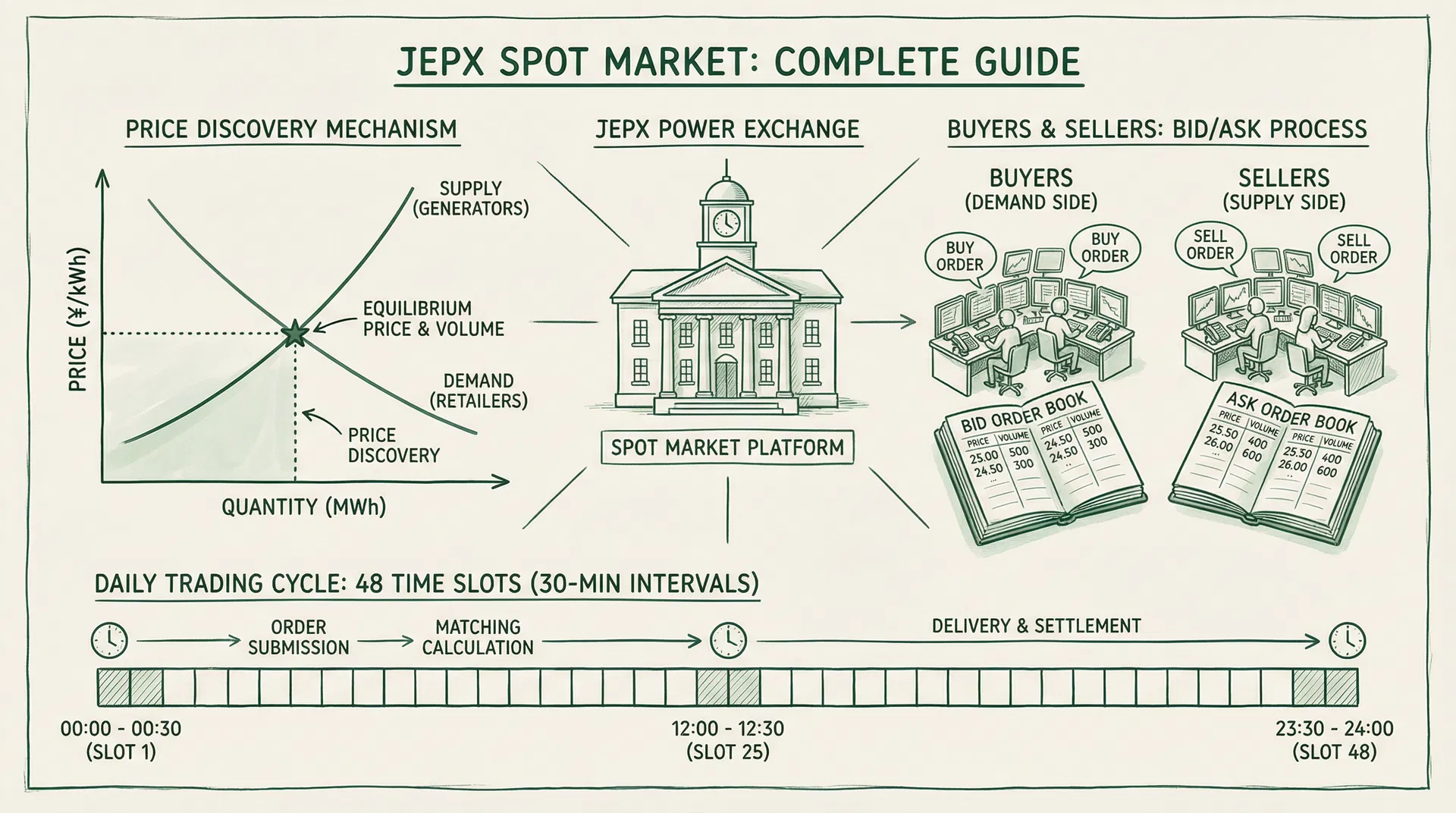
The Japan Electric Power Exchange (JEPX), established in 2003, is Japan's only wholesale electricity exchange. The spot market is its highest-volume segment, conducting daily competitive auctions for next-day electricity delivery.
[KEY DATA]
The JEPX spot market processes approximately 12 TWh per day, representing 30–40% of Japan's total electricity consumption.
Market Structure and Trading Hours
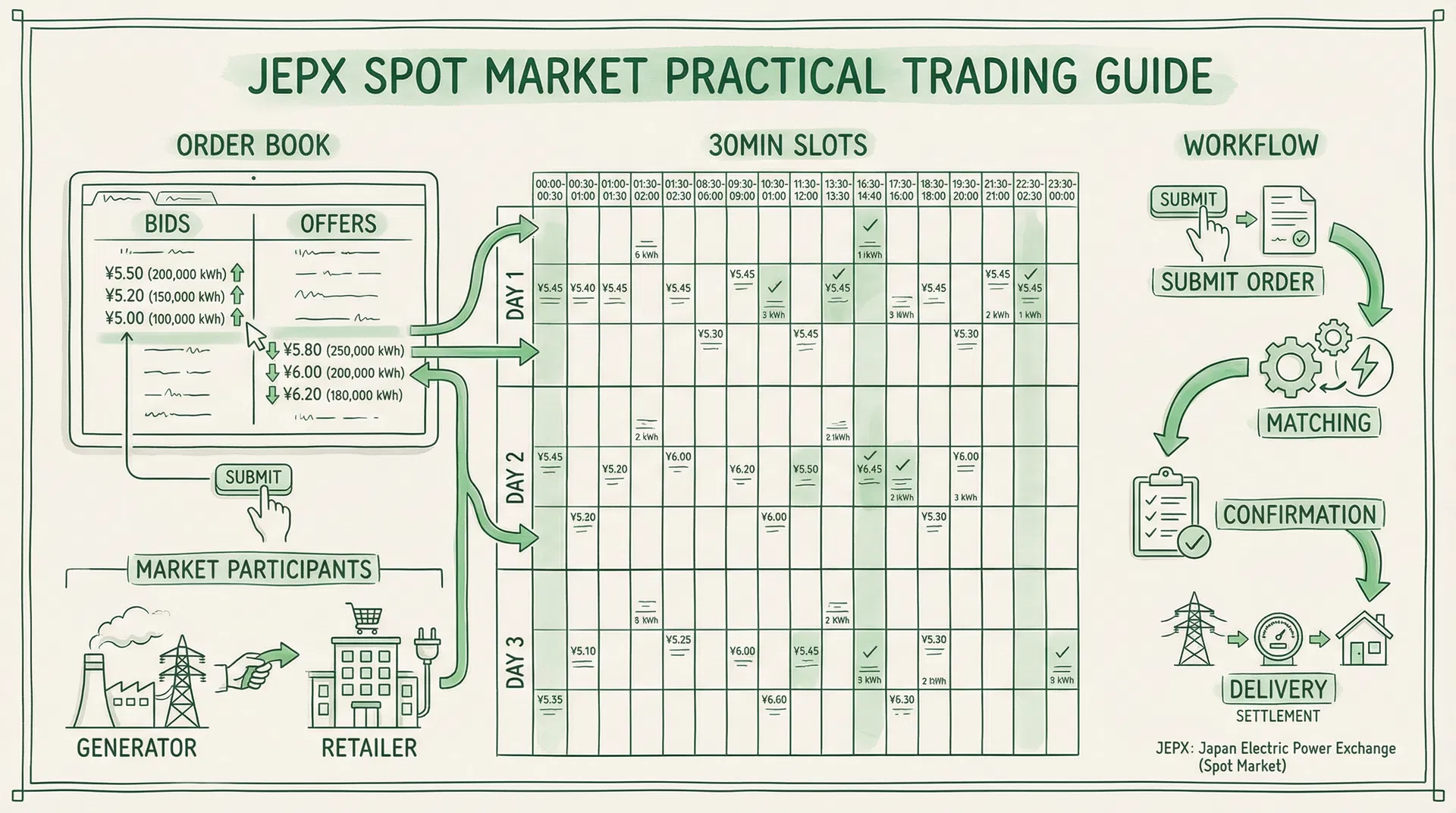
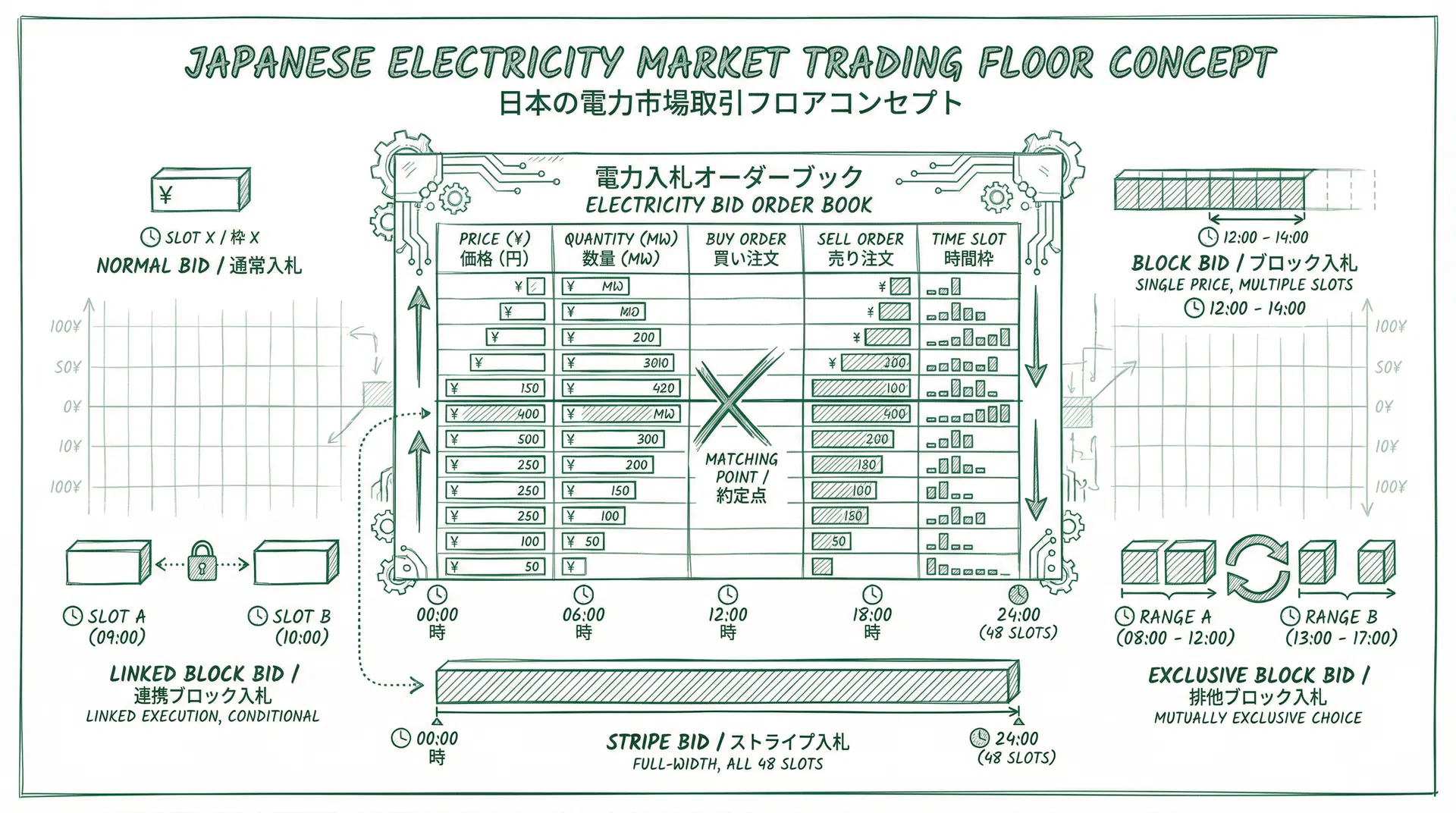
The JEPX spot market operates as a Day-Ahead Market. Bids are accepted from 10:00 AM daily for the following day's electricity. At 1:00 PM, a uniform price auction determines the System Price for each 30-minute delivery slot.
Nine Regional Price Areas
Japan's power grid is divided into nine regions: Hokkaido, Tohoku, Tokyo, Chubu, Hokuriku, Kansai, Chugoku, Shikoku, and Kyushu. Regional prices (Area Prices) can diverge from the System Price when transmission capacity constraints (interconnection congestion) occur.
The Uniform Price Auction Mechanism
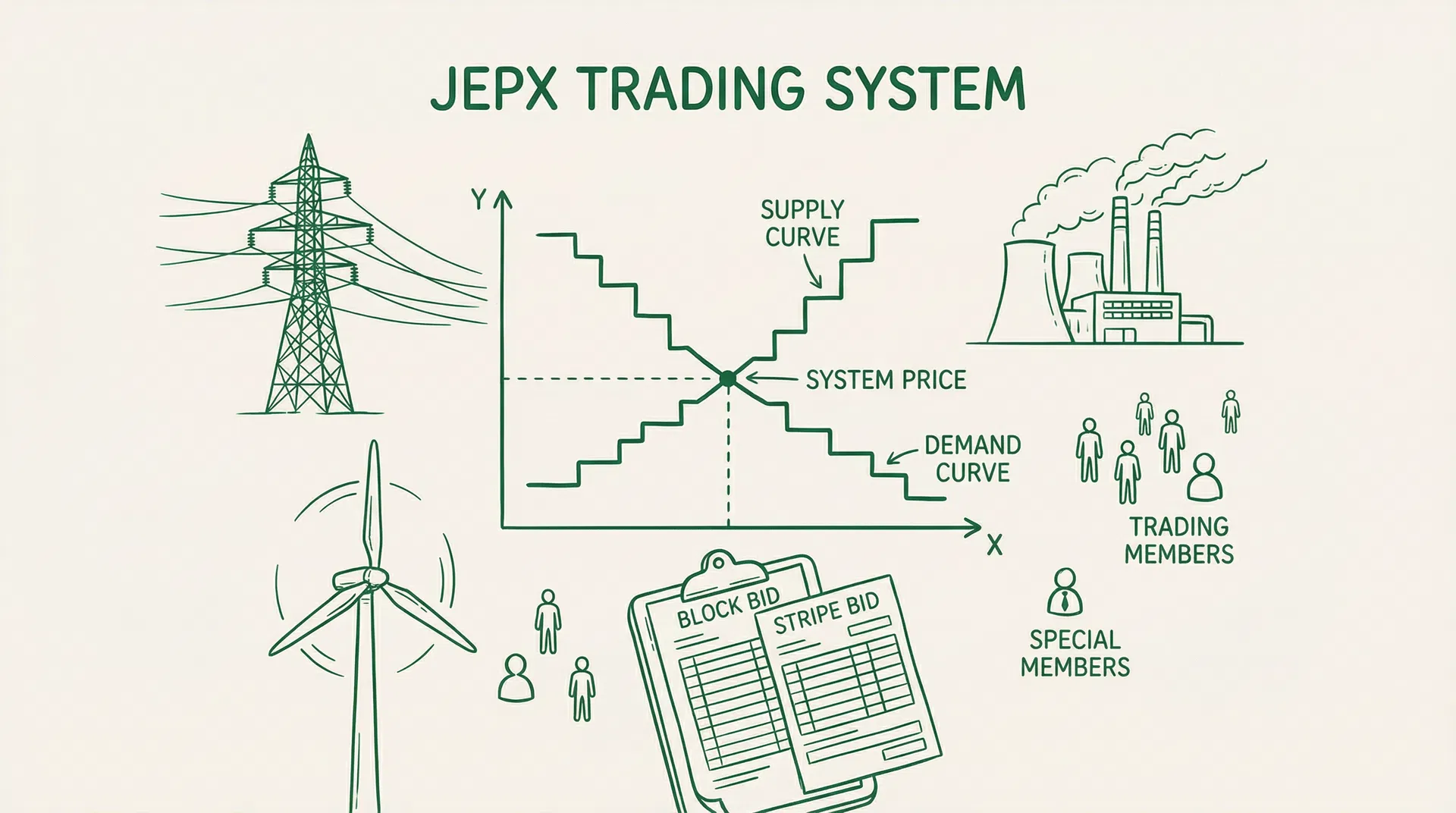
JEPX uses a Uniform Price Auction: all successful bidders pay the same Market Clearing Price, regardless of their individual bid prices. This design promotes market efficiency and fairness.
Understanding DA-24, DA-DT, and DA-PT
- DA-24 (All-Day Average): Weighted average across all 48 half-hour slots
- DA-DT (Daytime Average): 08:00–20:00 weighted average, reflecting daytime load
- DA-PT (Peak Average): 18:00–22:00 weighted average, reflecting evening peak demand
"Understanding JEPX's price formation mechanism is the essential first step for anyone entering Japan's electricity trading market."