Based on the latest data released by the Tokyo Commodity Exchange (TOCOM), we have conducted a comprehensive analysis of the Japan power futures market settlement prices for 2026/05/15. This report covers the performance of Baseload and Peakload power futures contracts in the East, West, and Chubu regions.
1. East Area Price Trends
The power futures contracts in the East Area show a significant price premium during the summer months, reflecting market expectations of surging electricity demand for air conditioning due to high summer temperatures.
- Baseload: The settlement price for the June 2026 contract is 21.20 JPY/kWh, while July and August climb to 21.63 JPY/kWh and 21.69 JPY/kWh, respectively.
- Peakload: Price volatility is even more pronounced. The July and August peakload contracts reached 28.16 JPY/kWh and 28.03 JPY/kWh, respectively, indicating extremely high expectations for daytime peak demand.
2. West Area Price Trends
The overall price level in the West Area is slightly lower than in the East, but it also exhibits distinct seasonal characteristics.
- Baseload: The settlement prices for July and August 2026 are 18.26 JPY/kWh and 18.46 JPY/kWh, respectively.
- Peakload: The July and August peakload contracts are 24.85 JPY/kWh and 25.11 JPY/kWh, respectively, reflecting strong summer peak demand in the West Area.
3. Chubu Area Price Trends
As a crucial hub connecting East and West Japan, the Chubu Area's price trends typically fall between the two and serve as an important indicator.
- Baseload: The settlement prices for July and August 2026 are 20.15 JPY/kWh and 20.33 JPY/kWh, respectively.
- Peakload: The July and August peakload contracts are 25.44 JPY/kWh and 25.78 JPY/kWh, respectively.
Market Outlook and Policy Dynamics
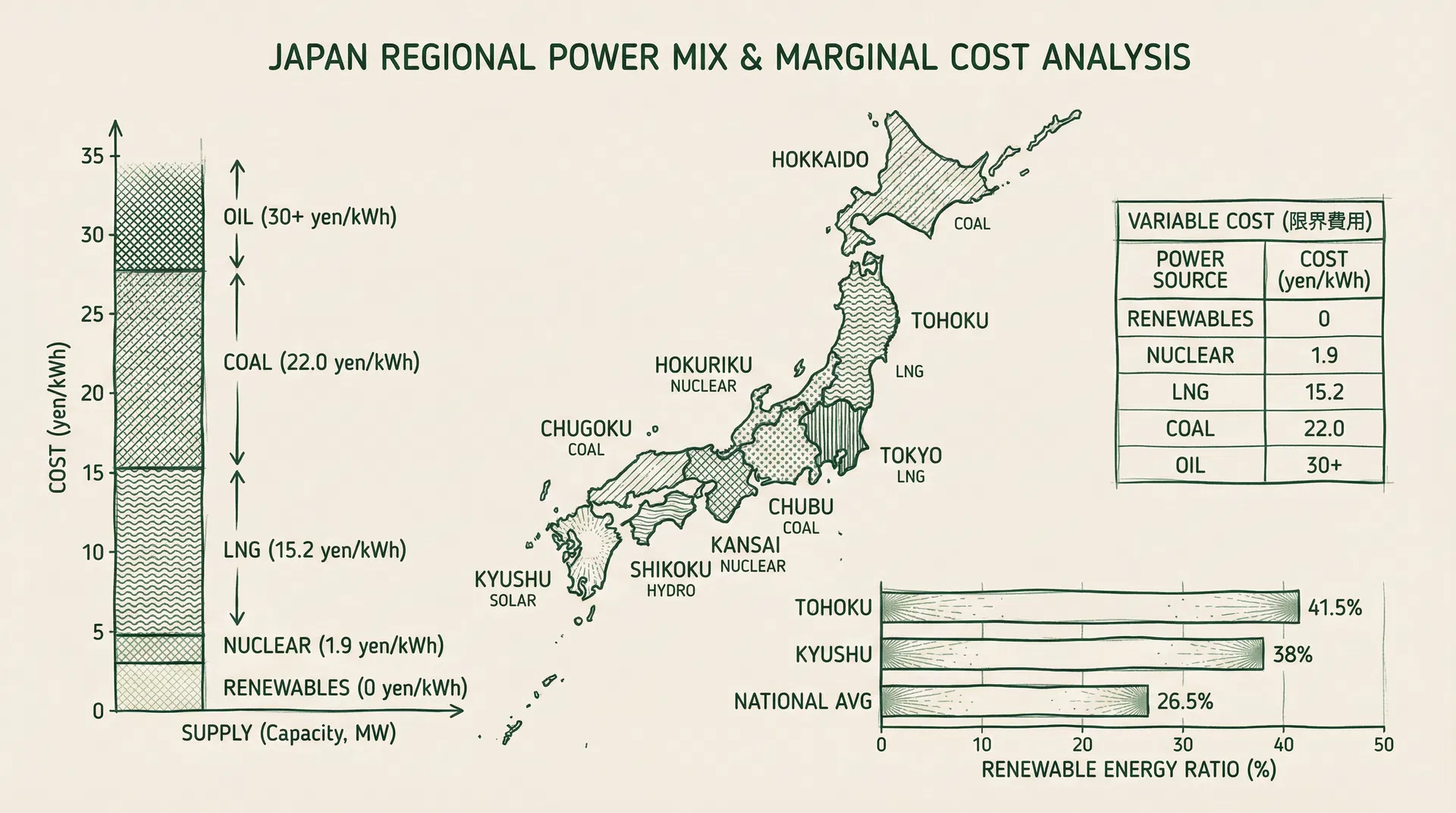
Looking at the forward curve, the market remains cautious about power supply for the summer of 2026. The significantly higher peakload contract prices in the East Area compared to other regions may be related to the region's generation mix and grid transmission constraints. Investors and power market participants should closely monitor upcoming summer temperature forecasts and potential power plant maintenance schedules.
Meanwhile, with the increasing share of renewable energy (especially solar) in daytime generation, we observe the continuing impact of the "duck curve" effect on the price structure across all regions. Market participants are advised to utilize TOCOM futures contracts for effective price risk hedging.