I. What Is the Imbalance Fee?
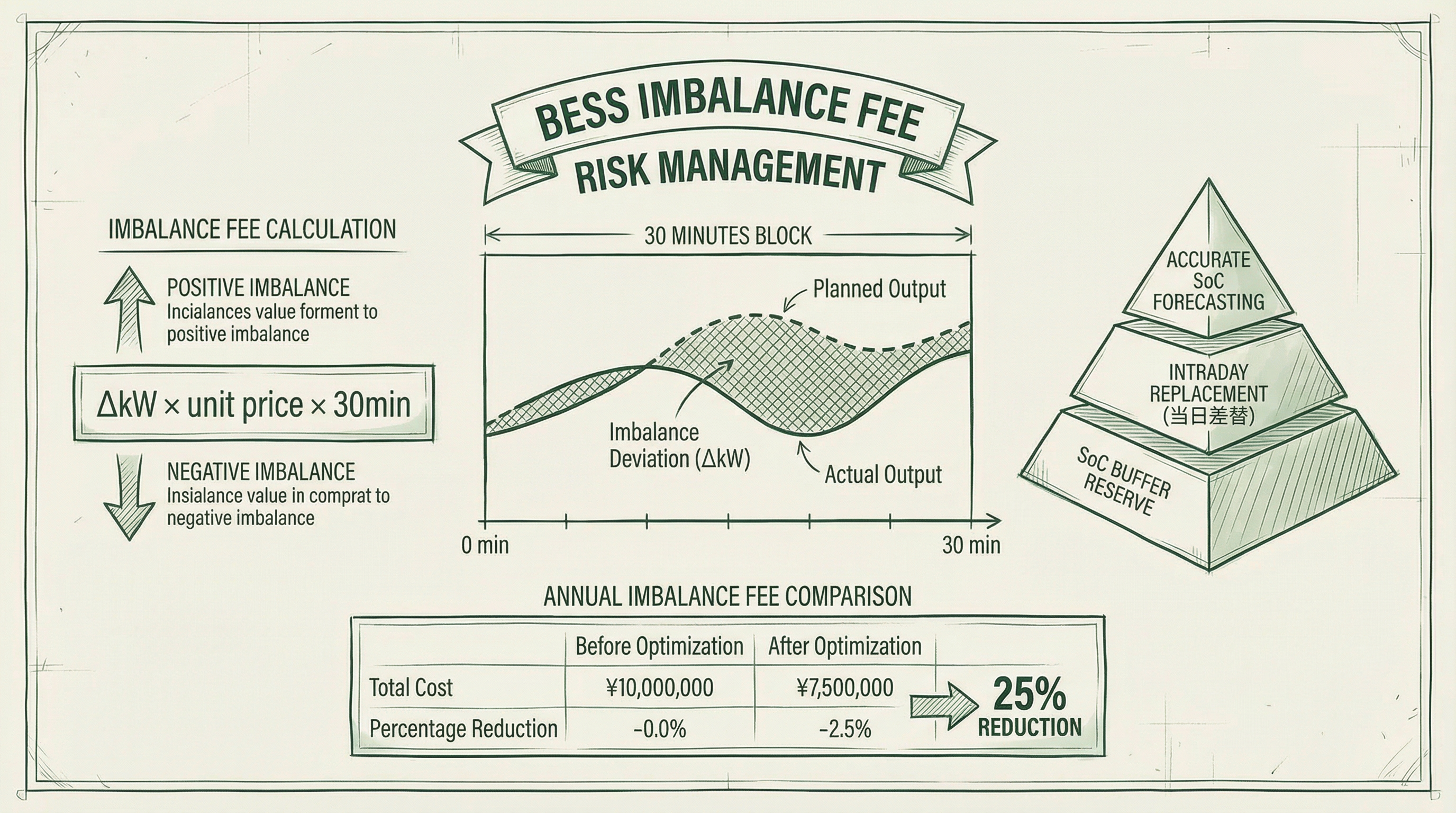
Japan's electricity market operates under a strict "simultaneous supply-demand balance" (同時同量, dōji dōryō) requirement. Every retail electricity provider and generator must ensure that their planned supply volume matches actual demand in each 30-minute settlement interval. In practice, weather variability, equipment failures, and forecast errors inevitably create discrepancies between planned and actual volumes. When such imbalances occur, the transmission system operator (TSO, or 一般送配電事業者) deploys reserve capacity (調整力) to restore balance, and the cost of this intervention is settled through the imbalance fee (インバランス料金).
The imbalance fee system serves two core purposes: maintaining grid frequency stability to prevent supply-demand collapse, and providing economic incentives that encourage market participants to minimize the gap between their planned and actual volumes.
📌 Core Concept
Imbalance = Planned Volume − Actual Volume. A positive value indicates "upward imbalance" (planned exceeds actual); a negative value indicates "downward imbalance" (actual exceeds planned). Both directions trigger imbalance fee settlement.
II. The 2020 Amendment: Establishing the Calculation Formula and the Alpha Problem
Before the landmark 2022 reform, the imbalance fee calculation methodology underwent an important revision in June 2020. Understanding this history is essential for grasping the policy rationale behind the current system design.
The Post-June 2020 Calculation Formula (Legacy System)
From June 1, 2020, the imbalance fee was calculated as follows:
Shortage Imbalance Fee (TSO supplemented the shortfall vs. plan)
= Weighted Average of Spot Market & 1-Hour-Ahead Market × α + β + K
Surplus Imbalance Fee (TSO purchased the surplus vs. plan)
= Weighted Average of Spot Market & 1-Hour-Ahead Market × α + β − L
α: Adjustment factor reflecting system-wide supply-demand conditions (>1 when tight, <1 when surplus)
β: Adjustment factor reflecting regional market price differentials
K: Incentive constant added when the system-wide balance is short (set by the Minister of Economy, Trade and Industry)
L: Incentive constant subtracted when the system-wide balance is surplus (set by the Minister of Economy, Trade and Industry)
The anchor of this formula is the volume-weighted average price of the JEPX spot market and the 1-hour-ahead market, adjusted through four parameters: α, β, K, and L. The α factor is the most critical: it was designed to amplify penalties when the grid is tight and soften them when supply is abundant.
Worked Numerical Example (Legacy Formula)
The following illustrates a complete calculation for a "shortage imbalance" during a supply-tight period under the legacy formula:
📊 Scenario: Summer afternoon peak interval (wide-area reserve margin ≤ 5%)
• JEPX spot & 1-hour-ahead weighted average price = ¥15/kWh
• α = 1.3 (supply-demand tightness pushes α above 1)
• β = ¥0.5/kWh (Tokyo area regional price differential adjustment)
• K = ¥5/kWh (incentive constant for system-wide shortage)
Shortage Imbalance Fee calculation:
= 15 × 1.3 + 0.5 + 5
= 19.5 + 0.5 + 5
= ¥25/kWh
If a participant had 1,000 kWh of shortage imbalance in this interval, the imbalance fee payable would be ¥25,000.
By contrast, during a system surplus period (e.g., midday solar overproduction), α might fall to 0.7. At the same market price of ¥15/kWh, the shortage imbalance fee would drop substantially (e.g., 15 × 0.7 + 0.5 + 0 = ¥11.0/kWh). This is the core logic of the α design: dynamically adjusting penalty intensity based on system-wide supply-demand conditions.
The February 2020 Reversal and the Subsequent Fix
In February 2020, an event exposed a critical design flaw in the legacy system. High solar generation caused JEPX spot prices to collapse, which should theoretically have reduced imbalance fees. Instead, a computational anomaly in the α factor caused a reversal effect: the lower market prices fell, the higher imbalance fees became—the exact opposite of the intended incentive structure.
In response, the June 2020 amendment removed the floor constraint on the α value, allowing it to genuinely decline to rational levels during system surplus conditions and preventing future reversals.
The January 2021 Cold Wave Crisis: The ¥200/kWh Emergency Cap
From late 2020 into early 2021, a severe cold wave caused acute electricity shortages across Japan. JEPX spot prices surged to historic highs, and the market-price-based imbalance fees followed, pushing numerous small retail electricity providers to the brink of insolvency. On January 15, 2021, the Ministry of Economy, Trade and Industry issued an emergency special approval: from January 17 through June 30, 2021, the imbalance fee unit price cap was set at ¥200/kWh. The January 2021 imbalance fees were also permitted to be paid in 12 monthly installments, and JEPX was asked to apply flexible treatment to the security deposits required of market participants.
This ¥200/kWh cap subsequently became the provisional baseline for the C-value in the 2022 reform, and the policy starting point for the 2026 increase to ¥300/kWh.
III. The 2022 Reform: From Market Price to Adjustment Capacity kWh Price
Following Japan's full retail electricity liberalization in 2016, the imbalance fee system underwent several revisions. The 2022 reform represented the most fundamental restructuring to date, shifting the pricing basis from JEPX spot market prices to the "marginal kWh price of adjustment capacity."
The flaw in the old system was that when JEPX spot prices were low, market participants had an incentive to accept imbalance penalties rather than procure electricity at higher prices in the intraday market, undermining the price signal mechanism. The new system directly reflects the marginal cost of adjustment capacity actually dispatched by the TSO, making the imbalance fee a more accurate indicator of electricity scarcity at each time slot.
Standard Imbalance Fee Calculation
In each 30-minute interval, the TSO dispatches adjustment capacity resources in merit order (from lowest to highest marginal cost). The imbalance fee for that interval equals the kWh price of the last resource dispatched across the wide-area system (the highest price for upward adjustment, the lowest for downward adjustment).
Since each 30-minute interval consists of two 15-minute sub-periods with potentially different dispatch volumes, the final fee is calculated as a volume-weighted average:
Calculation Formula
Imbalance Fee (¥/kWh) = (First 15-min Unit Price × First 15-min Volume + Second 15-min Unit Price × Second 15-min Volume) ÷ (First 15-min Volume + Second 15-min Volume)
Example: First 15 min ¥10/kWh × 80 MWh, Second 15 min ¥14/kWh × 120 MWh → (10×80 + 14×120) ÷ (80+120) = ¥12.4/kWh
Corrected Imbalance Fee: The Supply Shortage Surcharge
During periods of supply-demand tightness, the standard imbalance fee alone may not adequately reflect system scarcity. The "corrected imbalance fee" (補正インバランス料金) adds a surcharge triggered by the wide-area reserve margin (広域予備率)—the ratio of available reserve capacity to peak demand across the entire grid.
| Wide-Area Reserve Margin | Trigger | Corrected Fee (FY2022–FY2025 Provisional) | Corrected Fee (FY2026 onwards) |
|---|
| ≤ 8% | D-value triggered | ¥45/kWh | ¥50/kWh |
| ≤ 3% | C-value triggered | ¥200/kWh (provisional) | ¥300/kWh |
| Output curtailment period | System surplus | ¥0/kWh | ¥0/kWh |
The C-value (applied when the wide-area reserve margin falls to 3% or below) was originally designed at ¥600/kWh, but was provisionally set at ¥200/kWh during the transition period to cushion the impact on market participants. This provisional measure was revised upward to ¥300/kWh effective April 2026, with a stated policy direction of gradually approaching the original level.
III. Policy Background of the 2026 Reform
On April 25, 2025, the Electricity and Gas Market Surveillance Commission formally decided to raise the C-value from FY2026. Several policy considerations drove this decision.
The ¥200/kWh cap was widely recognized as too low, causing market mechanism failure. When participants assumed imbalance fees would not exceed ¥200, they lacked incentive to procure electricity at higher prices in the intraday market, preventing market prices from rising sufficiently during shortage periods and making it difficult for TSOs to recover actual adjustment costs. The low cap also suppressed investment incentives for demand response (DR) and new flexible capacity resources, undermining the long-term flexibility of the power system.
From April 2026, the C-value rises to ¥300/kWh, accompanied by a new "cumulative price threshold system" as a safety net: if JEPX spot prices reach ¥200/kWh or above in 20 or more 30-minute slots within the preceding seven days, the C-value is temporarily reduced to ¥100/kWh until no slots at or above ¥100/kWh occur in the preceding seven days. This mechanism protects participants from unpredictable losses during prolonged high-price environments.
Balancing Market Structural Reform (April 2026 onwards)
Alongside the C-value adjustment, the demand-supply adjustment market (EPRX) undergoes major structural reform. All balancing products shift from weekly to day-ahead procurement in 30-minute units, low-voltage resources (household batteries, EVs) become eligible to participate for the first time, and the price cap for combined products is sharply reduced from ¥19.51 to ¥7.21/ΔkWh per 30 minutes. These reforms aim to improve market liquidity and build the system flexibility needed as renewable energy penetration continues to rise.
IV. Climate, Demand, and Grid Supply-Demand Dynamics
Imbalance fee volatility fundamentally reflects the degree of supply-demand tightness in the power system at each time slot. Climate conditions are the most direct and least predictable exogenous driver of this tightness, affecting both demand and supply simultaneously.
Summer Heat and Air Conditioning Demand
Japan's summer electricity demand correlates strongly with temperature. On days when the maximum temperature exceeds 35°C (猛暑日, extreme heat days), air conditioning demand surges and peak demand typically occurs between 2–4 PM. When tropical nights (minimum temperature ≥ 25°C) persist, overnight demand remains elevated, pushing down the wide-area reserve margin and significantly increasing the probability of corrected imbalance fee activation.
For the summer of 2026, the Japan Weather Association forecasts above-average temperatures nationwide, with an early end to the rainy season and an earlier onset of extreme heat. This implies that the high imbalance fee risk window may materialize earlier than in typical years.
Solar Power and the Duck Curve Effect
As Japan's installed solar capacity continues to expand, daytime supply surpluses have become increasingly common on sunny days, with imbalance fees falling to ¥0/kWh and output curtailment events multiplying. However, after sunset, solar generation drops sharply while air conditioning demand remains high, creating a rapidly widening supply-demand gap—the "duck curve" phenomenon. This intraday volatility substantially complicates supply-demand balance management for market participants and is a key driver behind the 2026 market reforms' emphasis on improving balancing market liquidity.
Typhoons and Grid Supply Risk
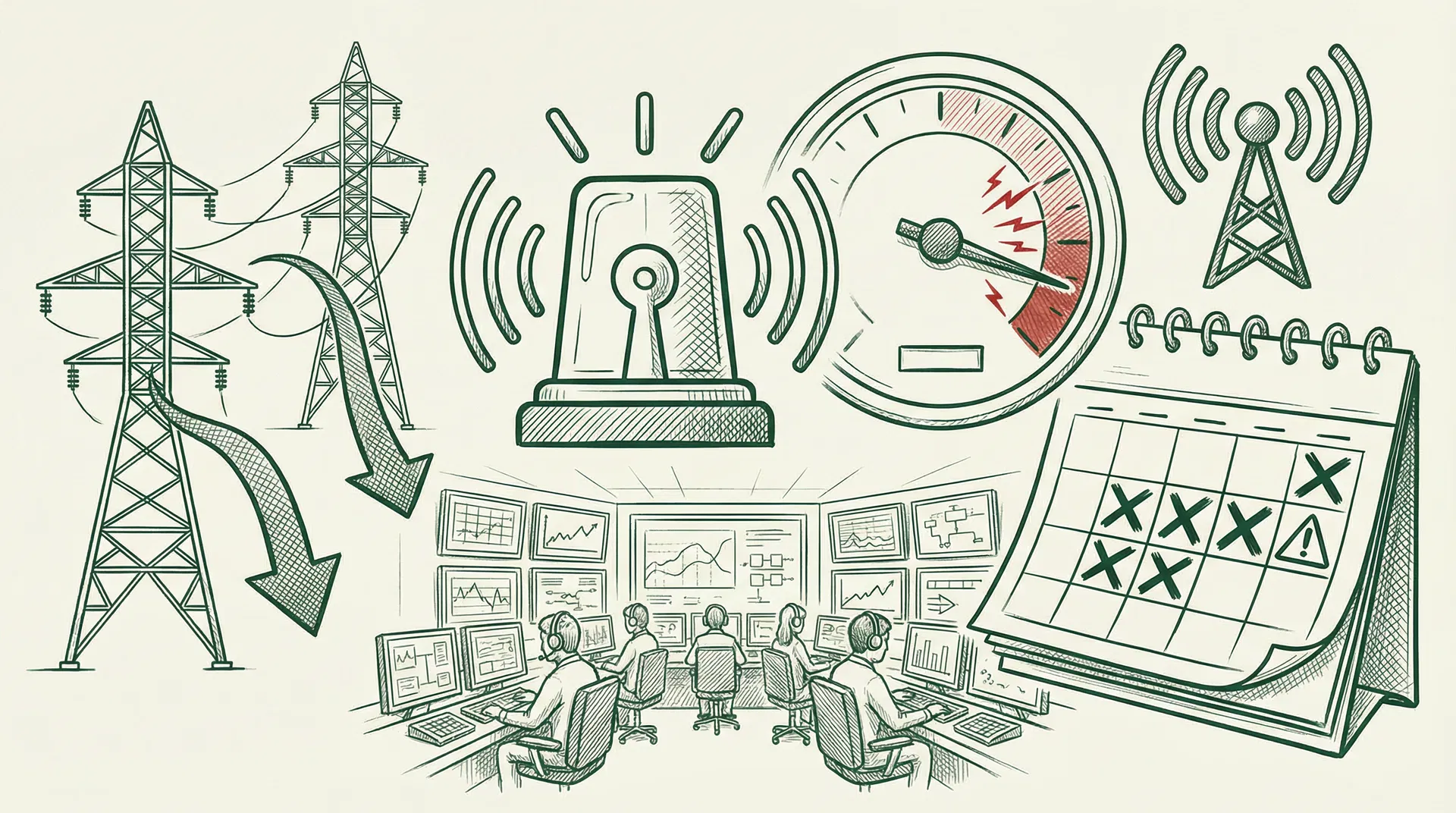
When typhoons approach, wind turbines automatically shut down to protect equipment, causing sudden generation drops. Strong winds and heavy rainfall can also damage transmission and distribution infrastructure, potentially triggering localized outages. These events can rapidly and dramatically alter the grid's supply-demand balance, causing extreme imbalance fee spikes. The second half of summer 2026 is forecast to carry elevated typhoon risk, and market participants should incorporate typhoon scenarios into their risk management frameworks.
Climate Scenario Impact Matrix
| Climate Scenario | Demand Impact | Supply Impact | Imbalance Fee Trend |
|---|
| Heatwave + Sunny | Sharp AC demand increase | High daytime solar, sharp evening drop | Low daytime → sharp evening spike |
| Heatwave + Cloudy/Rainy | Sharp AC demand increase | Low solar output | Elevated all day, high shortage risk |
| Sustained Tropical Nights | Overnight demand stays high | Zero solar at night | Persistently elevated overnight |
| Typhoon Approach | Short-term demand fluctuation | Wind shutdown, infrastructure risk | Extreme volatility, shortage risk |
| Output Curtailment Period | Normal demand | Solar surplus | ¥0/kWh |
V. Trends and Outlook Since 2026
With the April 2026 transition, Japan's electricity market has entered a new institutional framework for imbalance fees. The C-value increase to ¥300/kWh raises the maximum potential penalty cost during supply-shortage periods by 50%, with particularly significant implications for smaller retail providers and renewable energy generators whose supply-demand planning accuracy tends to be lower.
From a market structure perspective, the C-value increase is expected to improve intraday market liquidity. As penalty costs rise, participants have stronger incentives to actively close supply-demand gaps through intraday market transactions, enabling market prices to more accurately reflect actual grid conditions. This represents a positive institutional signal for the long-term health of Japan's electricity market.
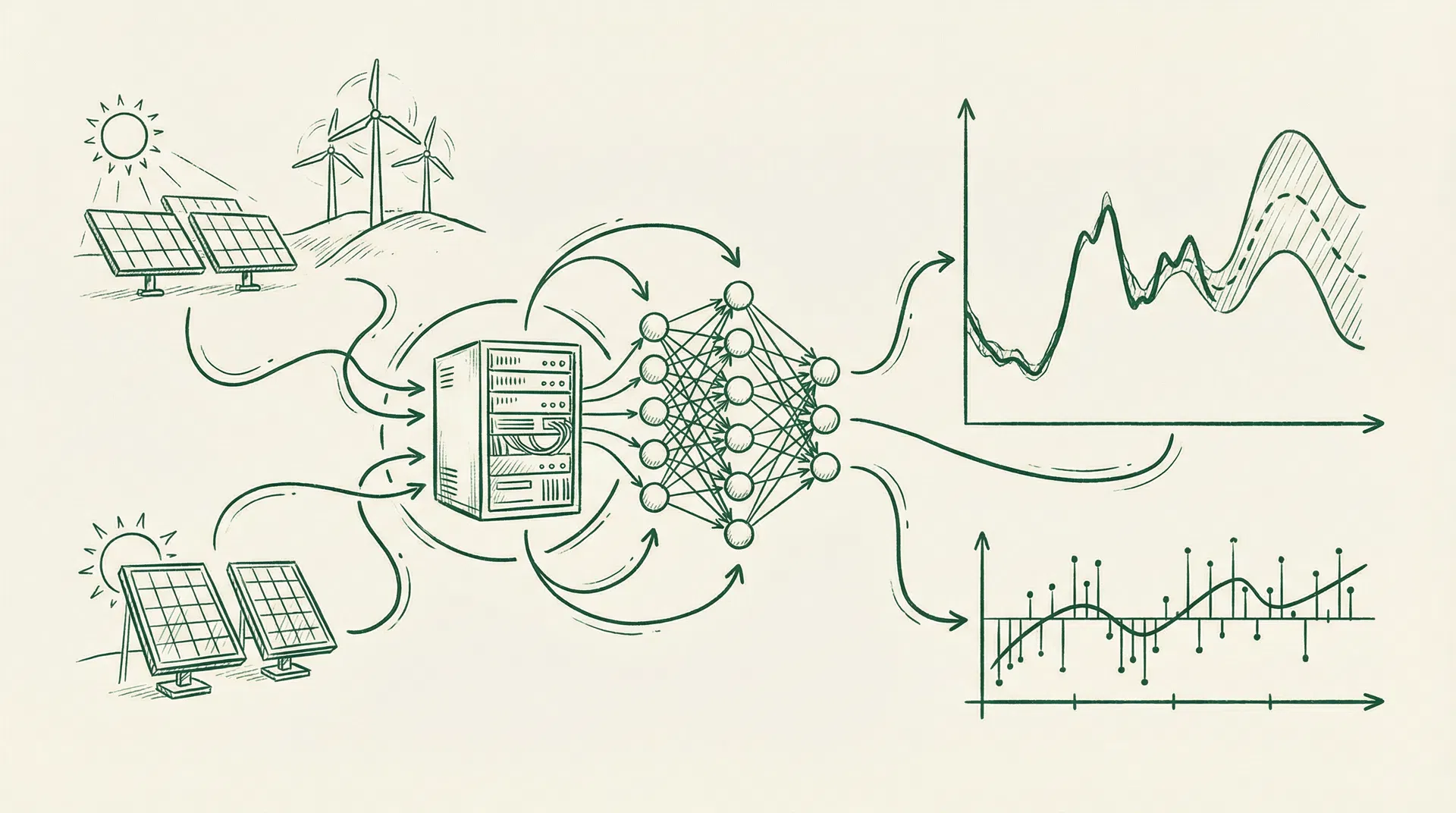
In the short term, however, rising compliance costs are unavoidable. Deploying AI-powered demand forecasting systems, building sophisticated intraday trading strategies, and developing flexible capacity resources such as battery storage are becoming essential competitive requirements for electricity market participants in the post-2026 environment.
Conclusion
The imbalance fee system is the financial enforcement mechanism of Japan's simultaneous supply-demand balance requirement and the institutional infrastructure linking market efficiency with grid stability. The 2026 reforms—the C-value increase, the structural overhaul of the balancing market, and the opening of participation to low-voltage resources—signal Japan's electricity market transitioning from a conservative "shock-absorbing" design to an active "market signal-strengthening" design. For electricity market participants, deeply understanding the imbalance fee calculation logic, mastering the mechanisms through which climate, demand, and supply-demand dynamics drive fee volatility, and building corresponding risk management capabilities are no longer optional—they are the prerequisites for survival in the new institutional framework.