Policy Background
Japan's electricity market is undergoing an unprecedented transformation aimed at achieving energy supply stability, decarbonization goals, and maximizing market efficiency. As a crucial component of this transformation, the Electricity Power Retail X-change (EPRX) plays a central role in modernizing market mechanisms. As of March 13, 2026, EPRX has fully transitioned to the Day-Ahead Market, abolishing the Weekly Market, and the settlement unit has been adjusted to yen/DeltakW per 30 minutes. This significant change aims to enhance market precision and responsiveness to better address real-time fluctuations in electricity supply and demand. After several months of stable operation in the Day-Ahead Market, EPRX is now focusing on the Ancillary Services Market to ensure the overall coordination and efficiency of the entire electricity trading system. The current revision of the Ancillary Services Market trading rules is precisely intended to align with the latest developments in the Day-Ahead Market and further optimize the overall operational efficiency and resilience of Japan's electricity market.
With the rapid introduction of renewable energy, the intermittency and variability of the power system are increasing, placing higher demands on maintaining a stable supply-demand balance. The Ancillary Services Market, as a critical mechanism for ensuring stable operation of the power system, has its efficiency and flexibility directly linked to the reliability of the entire grid. Therefore, regularly reviewing and adjusting its trading rules to adapt to the evolving market environment and technological advancements is an inevitable choice to ensure the continued healthy development of Japan's electricity market.
Key Contents
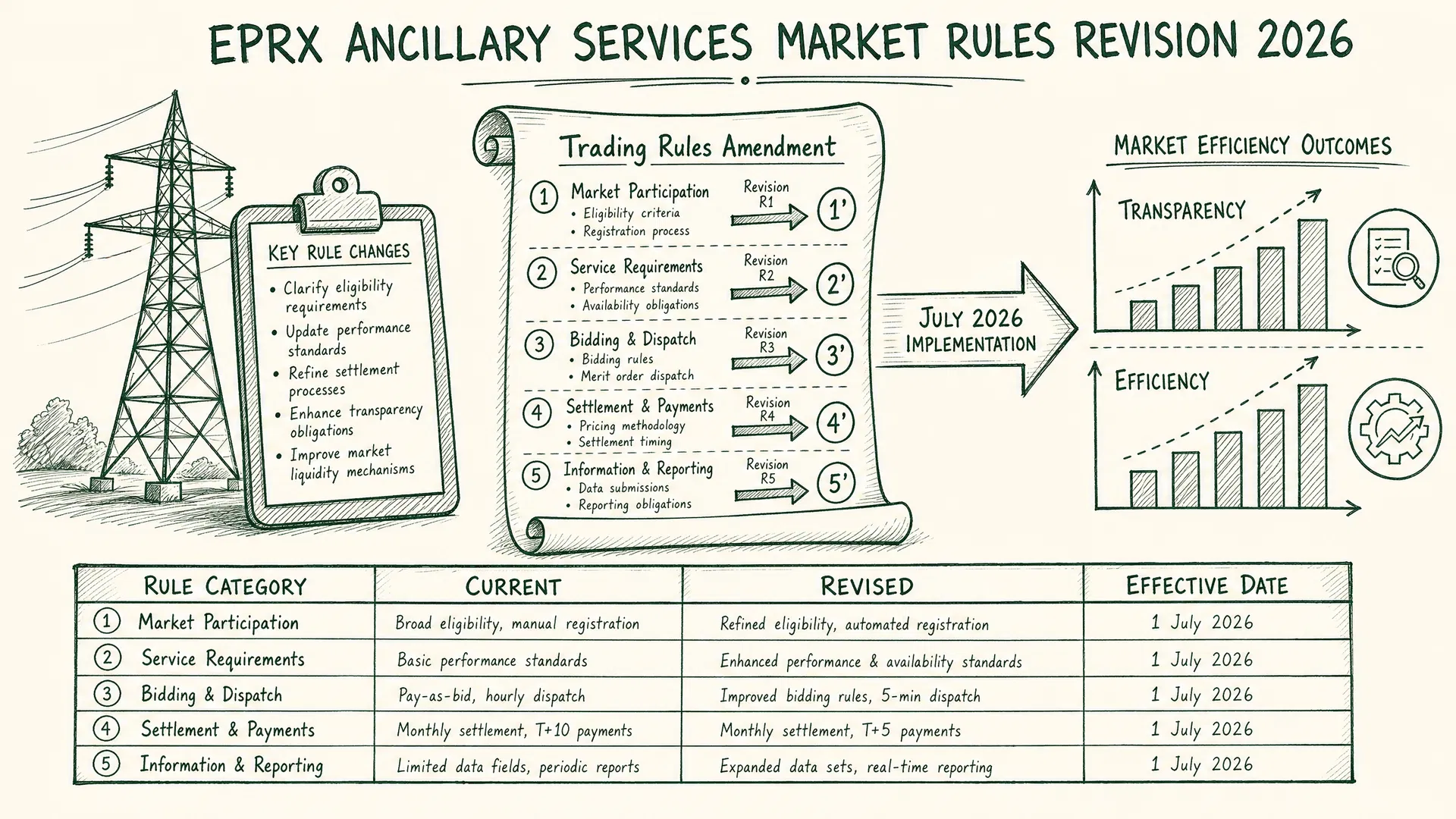
EPRX has initiated a public comment period for the draft revisions to the Ancillary Services Market trading rules, which are expected to be implemented in July 2026. While the specific details of the revisions are still in the public comment phase, based on the spirit of EPRX's announcement and current market trends, we can anticipate several key directions:
- Deep Integration with the Day-Ahead Market: One of the core objectives of this revision is to ensure that the operating rules of the Ancillary Services Market are highly coordinated with the newly implemented mechanisms of the Day-Ahead Market. This may include unifying or optimizing aspects such as trading schedules, settlement methods, and information disclosure standards, to reduce operational complexity for market participants and enhance opportunities for cross-market arbitrage.
- Enhancing Market Transparency and Efficiency: The new rules may introduce more detailed information disclosure requirements, for example, regarding the bidding strategies of ancillary service providers and the mechanisms for market clearing price formation. Concurrently, trading matching algorithms may be optimized to utilize market resources more effectively and reduce system operating costs.
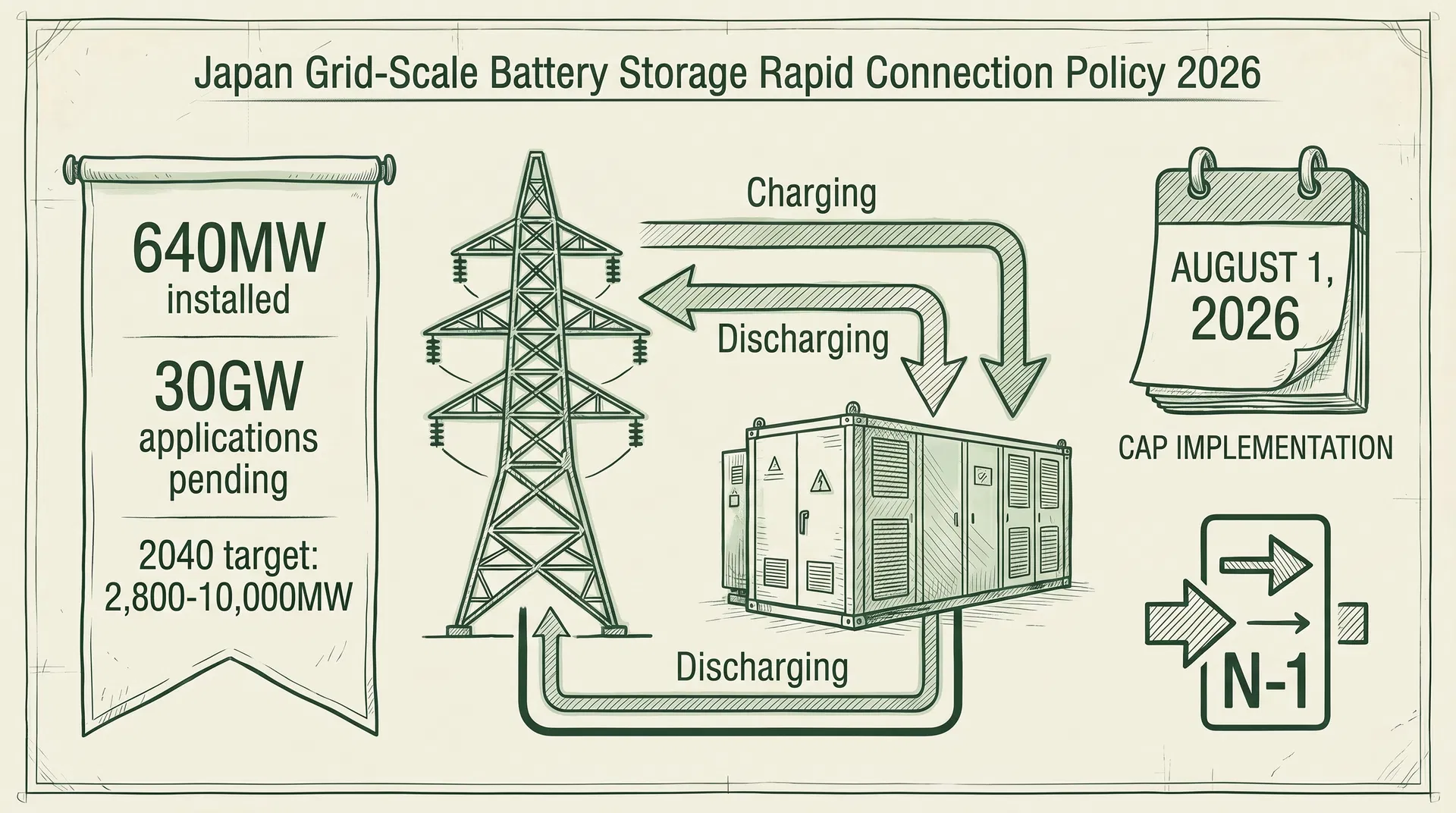
- Strengthening the Inclusion of New Ancillary Resources: With the rapid development of new flexible resources such as Battery Energy Storage Systems (BESS) and Demand Response (DR), the new rules are expected to further clarify the eligibility, bidding methods, and settlement mechanisms for these resources to participate in the Ancillary Services Market. This will help stimulate more innovative technologies to participate in the market and enhance the overall flexibility of the system.
- Optimizing Settlement and Risk Management: Given that the Day-Ahead Market has adopted a settlement unit of yen/DeltakW per 30 minutes, the settlement mechanism of the Ancillary Services Market may also undergo corresponding adjustments to achieve more refined metering and settlement. Simultaneously, new risk management measures may be introduced to address potential risks arising from increased market volatility.
- Streamlining Market Participation Process: To encourage more qualified market participants to enter the Ancillary Services Market, the new rules may simplify registration, qualification review, and trading processes, lowering entry barriers and thereby increasing market competitiveness.
These potential revision directions all aim to build a more resilient, efficient, and inclusive electricity market to better address the challenges of future energy transitions.
Impact on Electricity Traders
The revision of the Ancillary Services Market trading rules will have a profound impact on electricity traders, BESS operators, and other market participants. Here are several key areas of impact:
- Necessity for Strategic Adjustment:
- Trading Strategies: Market participants will need to re-evaluate and adjust their arbitrage strategies between the Day-Ahead Market and the Ancillary Services Market. As the rules for both markets become more aligned, precise forecasting and rapid response capabilities across markets will become even more critical.
- Asset Allocation: Companies with generation assets or energy storage assets will need to re-evaluate the optimal allocation and operational strategies for their assets across different markets to maximize returns.
- Enhanced Data Analysis and Forecasting Capabilities: More granular settlement units and potentially more information disclosure mean that market participants will require more robust data analysis tools and forecasting models to accurately identify market trends and price fluctuations, thereby making timely and effective decisions.
- Opportunities and Challenges for BESS Operators:
- New Opportunities: The new rules are expected to provide BESS with clearer and fairer participation mechanisms, allowing them to gain more revenue opportunities from providing services such as frequency regulation and reserve capacity. This will encourage further investment and deployment of BESS technology.
- New Challenges: At the same time, BESS operators will need to adapt to new bidding and settlement methods and may face increased market competition. Precise charging/discharging strategies and optimized operational management will be key to success.
- Compliance and Operational Risk: Market participants must carefully study the new trading rules to ensure their trading activities fully comply with regulations, avoiding potential penalties or market restrictions. Additionally, new operational procedures may introduce operational risks during the initial adaptation period.
- Technical System Upgrades: To cope with faster trading frequencies, more granular settlements, and more complex data processing requirements, market participants may need to upgrade their trade management systems, data acquisition, and analysis platforms.
Overall, this revision is another step for Japan's electricity market towards maturity and efficiency. Market participants should actively engage in the public comment process and prepare in advance to seize the opportunities presented by the new rules and address potential challenges.
Source: EPRX Official Announcement: Public Comment on Ancillary Services Market Trading Rules Revision (Scheduled for July 2026)