Categories
Policy & Regulation20 articles

Policy & Regulation

Japan electricity policy: renewable FIT/FIP, capacity market, liberalization and carbon-neutral policy updates.

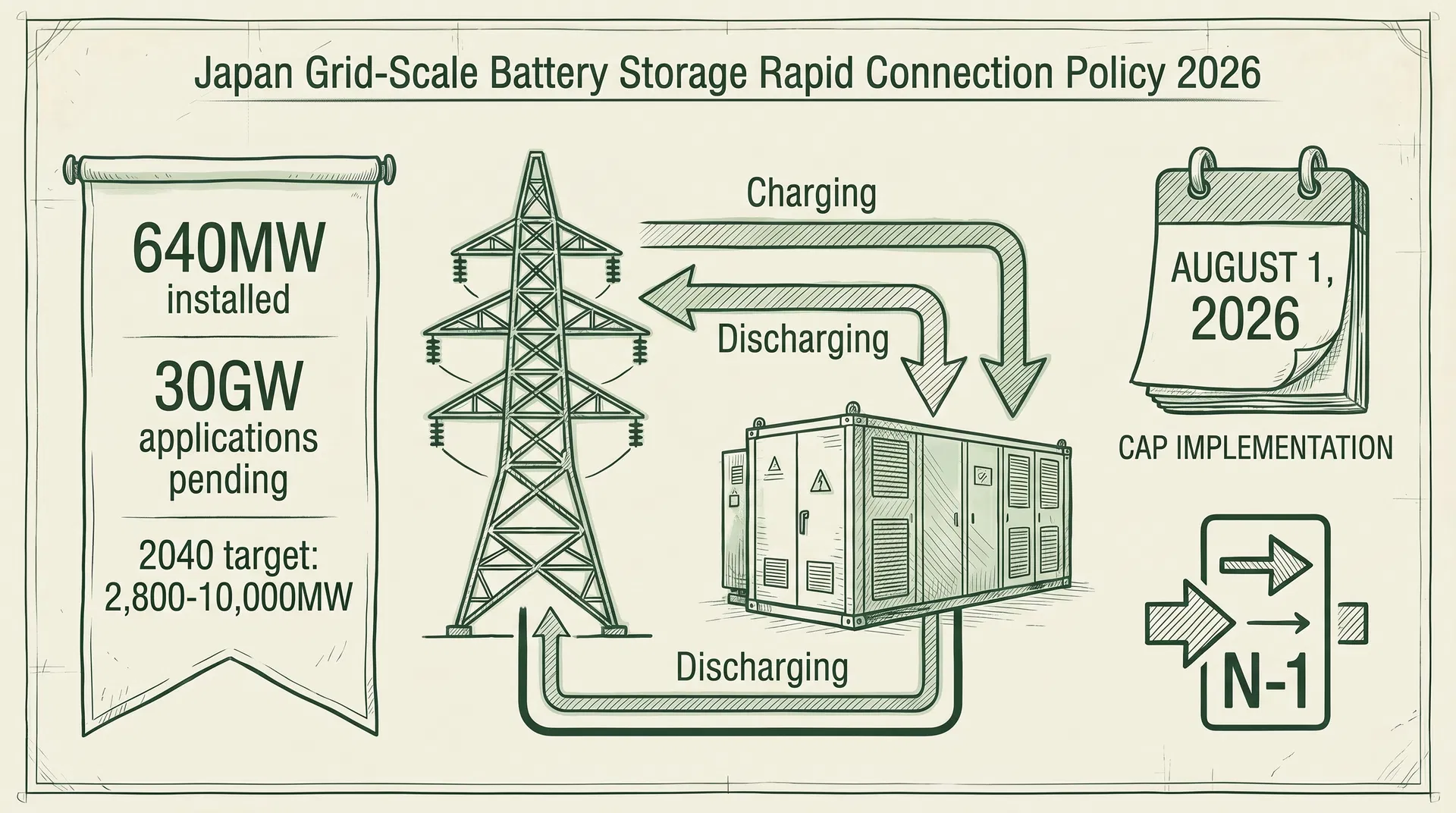
Japan Grid-Scale Battery Storage Policy: Rapid Grid Connection and Non-Firm Access Reform (April 2026)
Policy & Regulation

Japan Grid-Scale Battery Storage Policy: Rapid Grid Connection and Non-Firm Access Reform (April 2026)

Japan\'s Ministry of Economy, Trade and Industry (METI) is actively pursuing significant reforms to its grid-scale battery storage (BESS) policies, aiming to accelerate grid connection and introduce non-firm access mechanisms. These initiatives, detailed in April 2026 working group documents, are crucial for integrating a rapidly expanding renewable energy landscape and enhancing grid stability. The policy adjustments are designed to address current limitations, particularly the underutilization of BESS for energy arbitrage, and to pave the way for a more flexible and resilient power grid by 2040.

15min
Read Article
Share
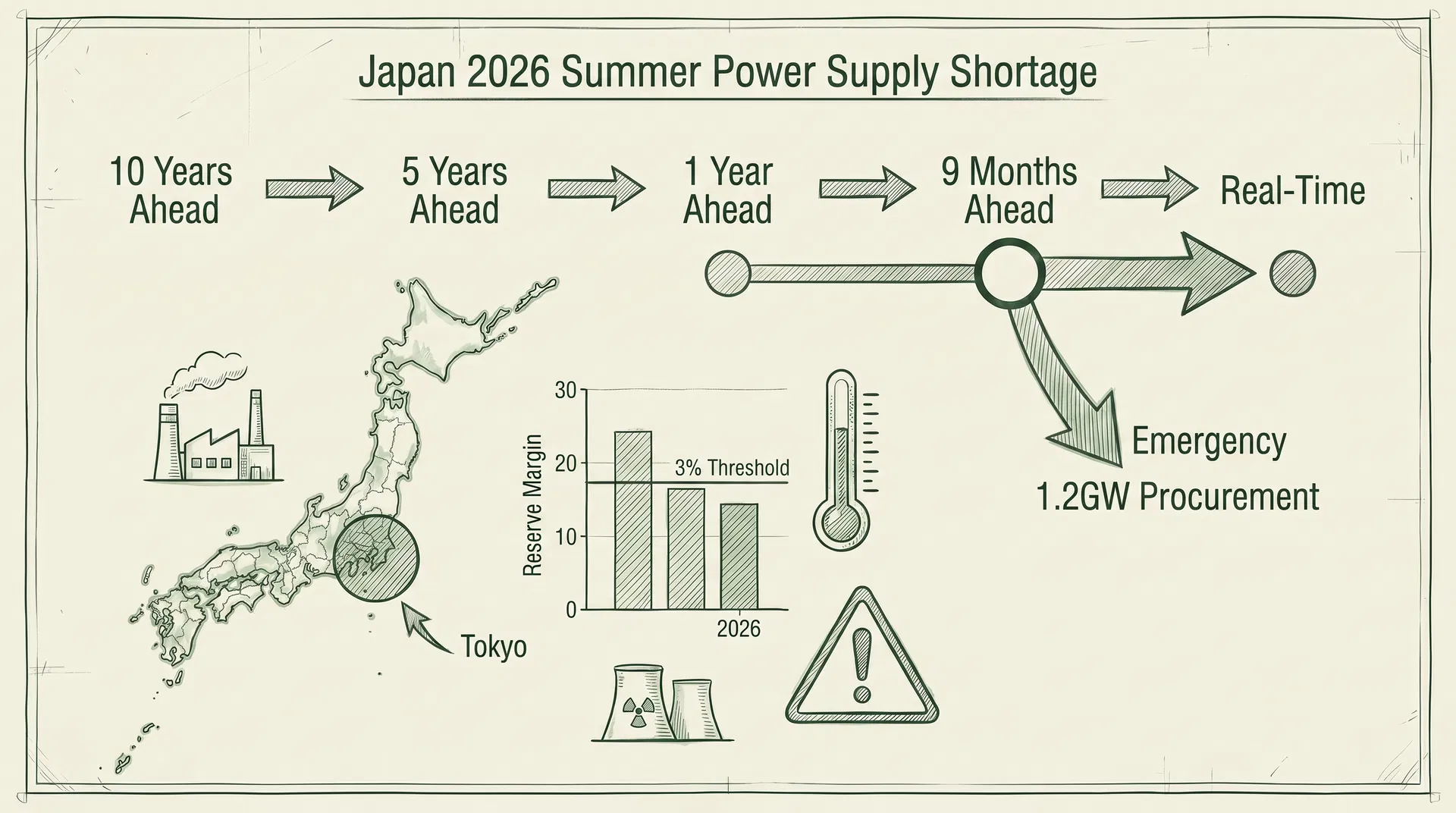
Japan's 2026 Summer Power Supply Shortage and New Short-Term Capacity Procurement Framework (April 2026)
Policy & Regulation

Japan's 2026 Summer Power Supply Shortage and New Short-Term Capacity Procurement Framework (April 2026)

Japan's energy landscape faces a critical juncture with a projected power supply shortage for summer 2026 in the Tokyo area, falling below the 3% reserve margin. METI's immediate response includes a 1.2 GW emergency kW public tender, alongside an urgent study with OCCTO to institutionalize a new Short-term Supply Capacity Procurement Framework. This initiative aims to address supply tightness driven by aging thermal plant retirements, delayed renewable integration, and rising demand from data centers and semiconductor factories, ensuring grid stability amidst decarbonization efforts.

15min
Read Article
Share
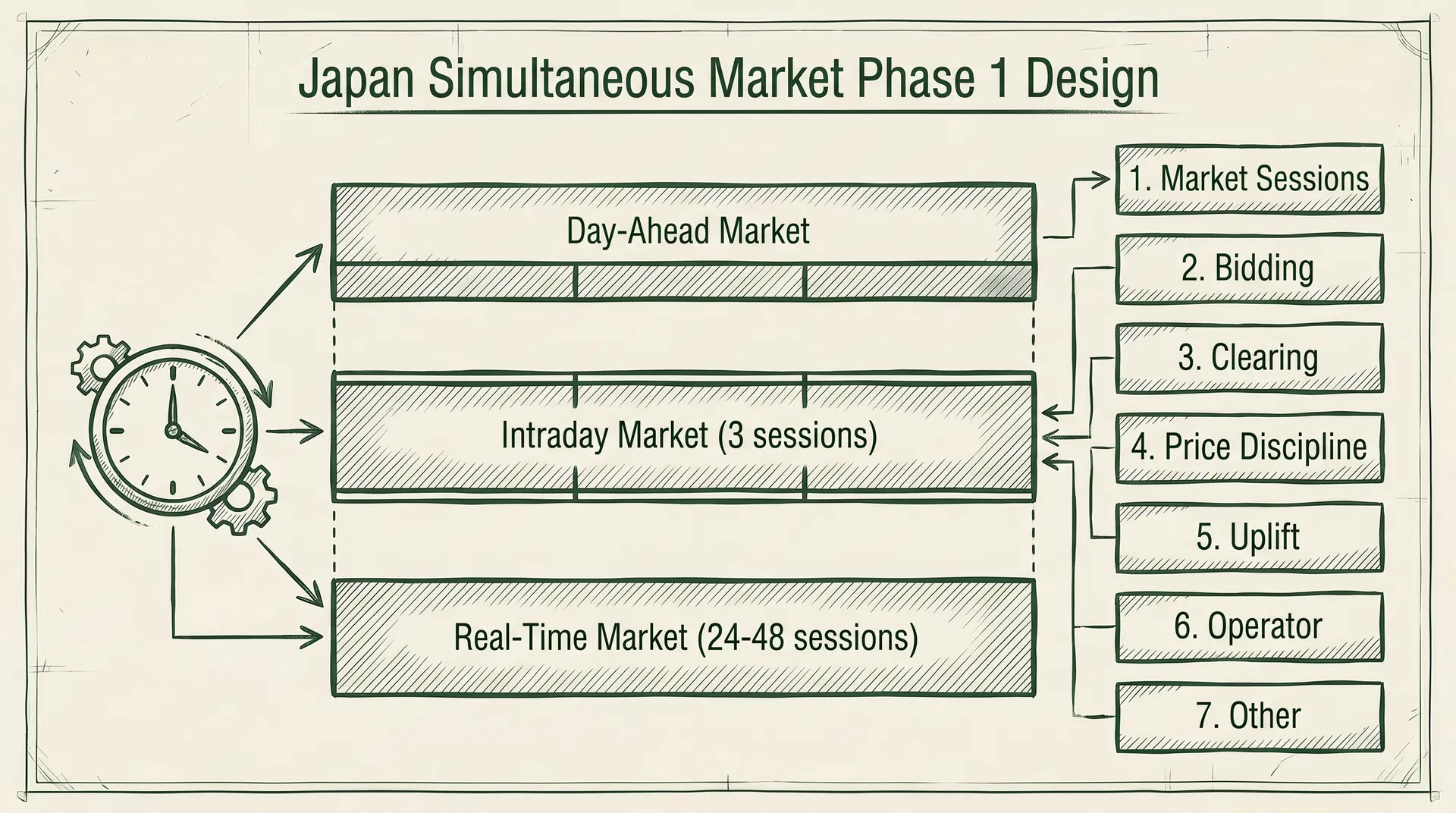
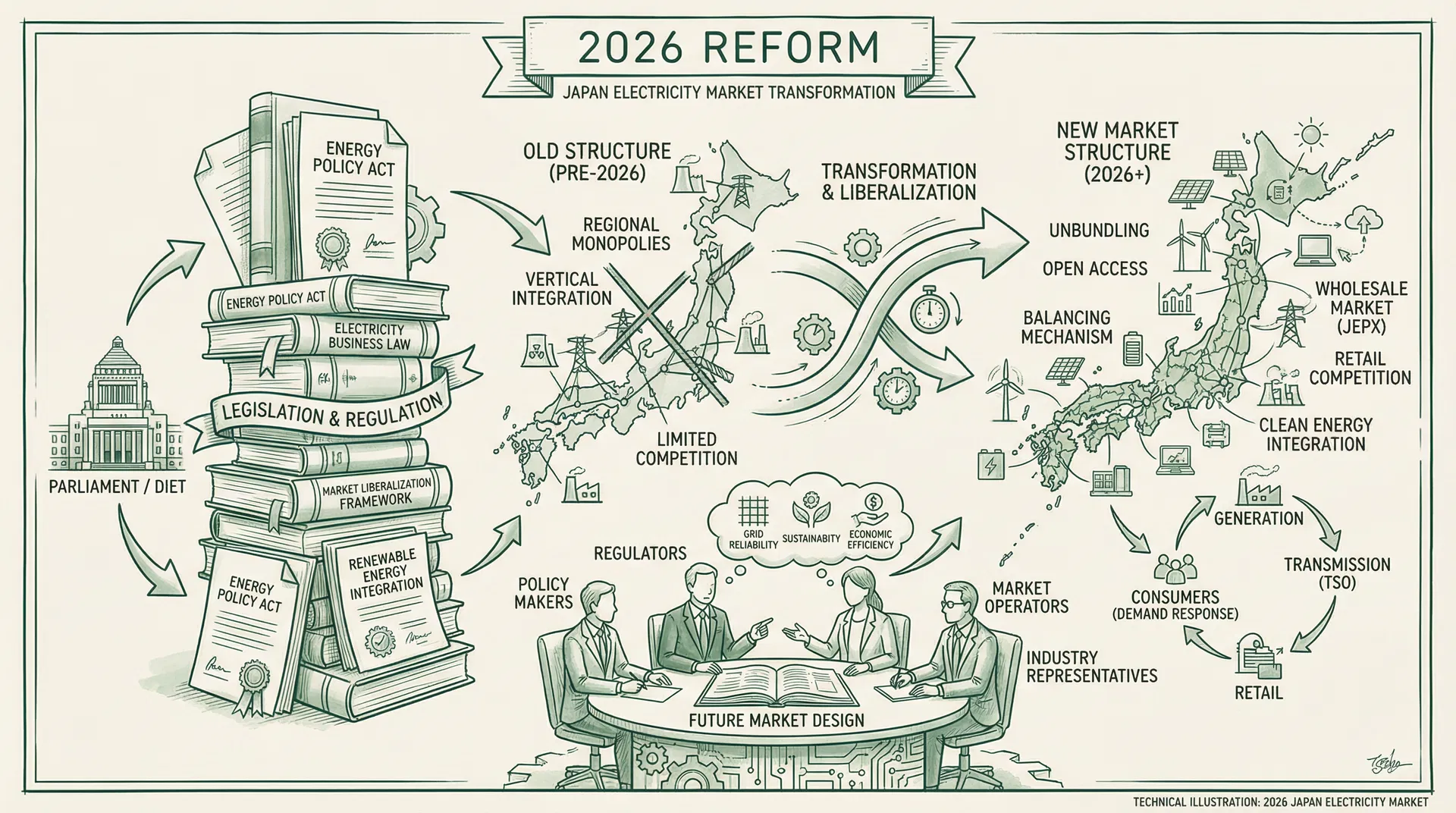
Japan's Major Power Market Institutional Reform: METI Restructures Policy Working Groups into Three New WGs (April 2026)
Policy & Regulation

Japan's Major Power Market Institutional Reform: METI Restructures Policy Working Groups into Three New WGs (April 2026)

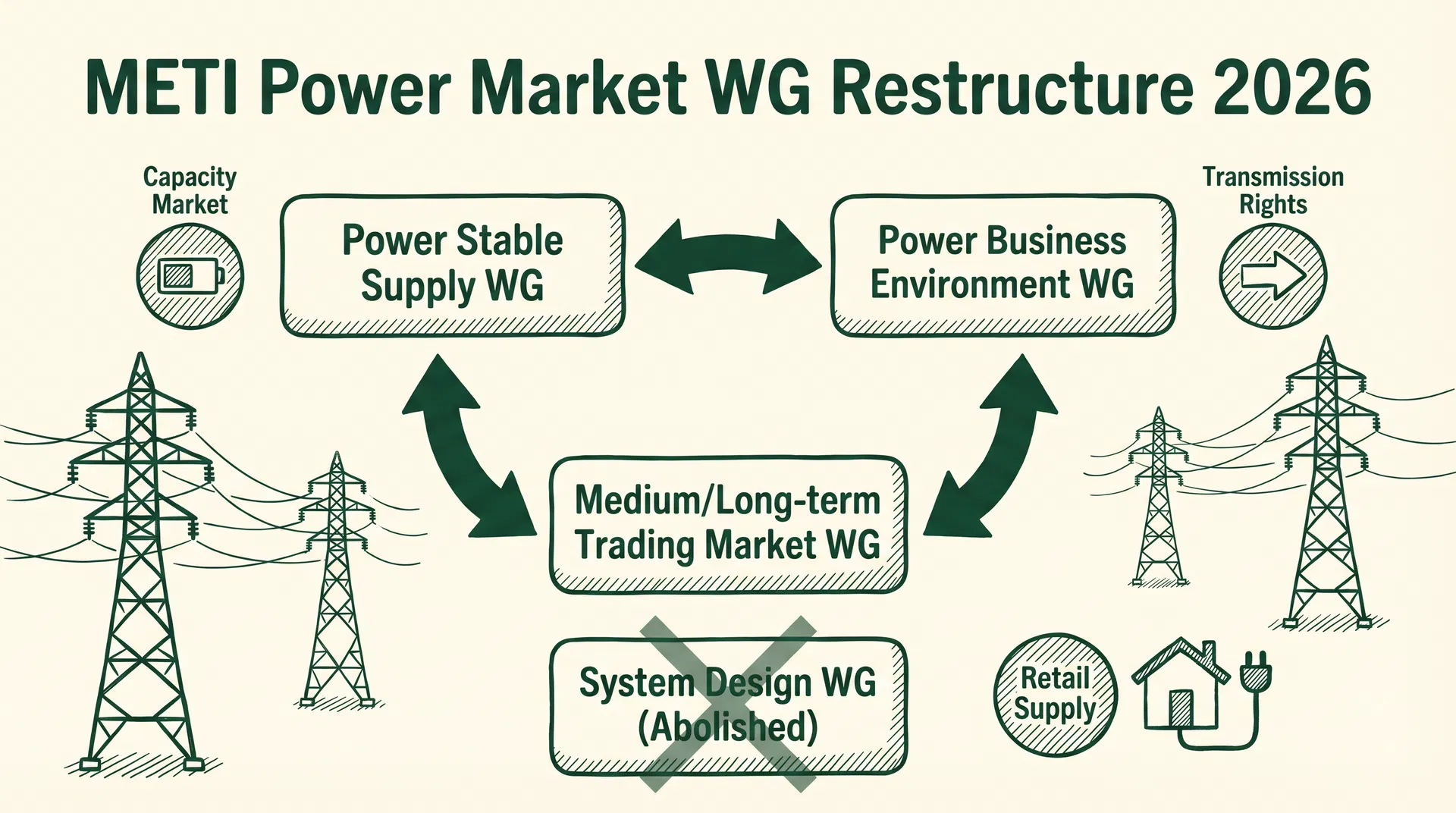
Japan's Ministry of Economy, Trade and Industry (METI) announced a significant restructuring of its power market policy working groups in April 2026, marking a shift from the design phase to the implementation phase of Japan's power system reform. The former 'System Design Working Group' and 'System Review Working Group' have been abolished, replaced by three new specialized groups: the Power Stable Supply Working Group, the Power Business Environment Working Group, and the Medium/Long-term Trading Market Working Group. This realignment aims to address complex challenges in the power market more precisely, ensuring stable supply, fostering competition, and promoting decarbonization.
15min
Read Article
Share
EPRX Announcement: Impact of May's Tertiary Reserve 2 Requirement and Reduction Factor Update on the Market
Policy & Regulation

EPRX Announcement: Impact of May's Tertiary Reserve 2 Requirement and Reduction Factor Update on the Market

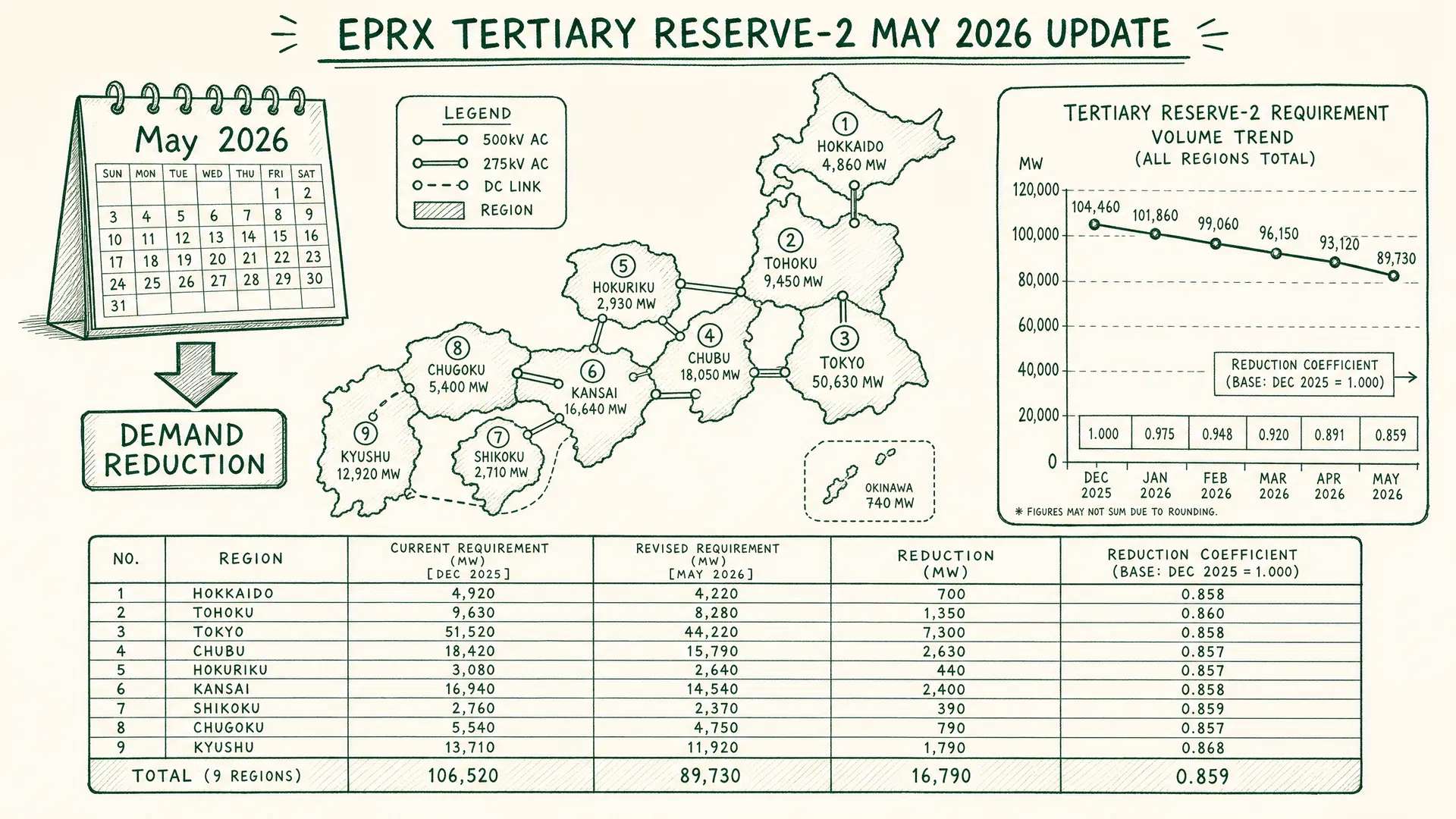
The Japan Electric Power Exchange (EPRX) recently announced updates to the Tertiary Reserve 2 requirement and reduction factor for May 2026. This adjustment aims to optimize the supply-demand balance and stability of the power system, making it crucial for electricity traders, BESS operators, and other market participants to understand its potential implications.

8min
Read Article
Share
OCCTO Battery Storage "Storage-Type Operation" Policy Analysis: The 10MW Threshold, Dedicated Line Requirements, and TSO Real-Time kWh Management Framework
Policy & Regulation

OCCTO Battery Storage "Storage-Type Operation" Policy Analysis: The 10MW Threshold, Dedicated Line Requirements, and TSO Real-Time kWh Management Framework

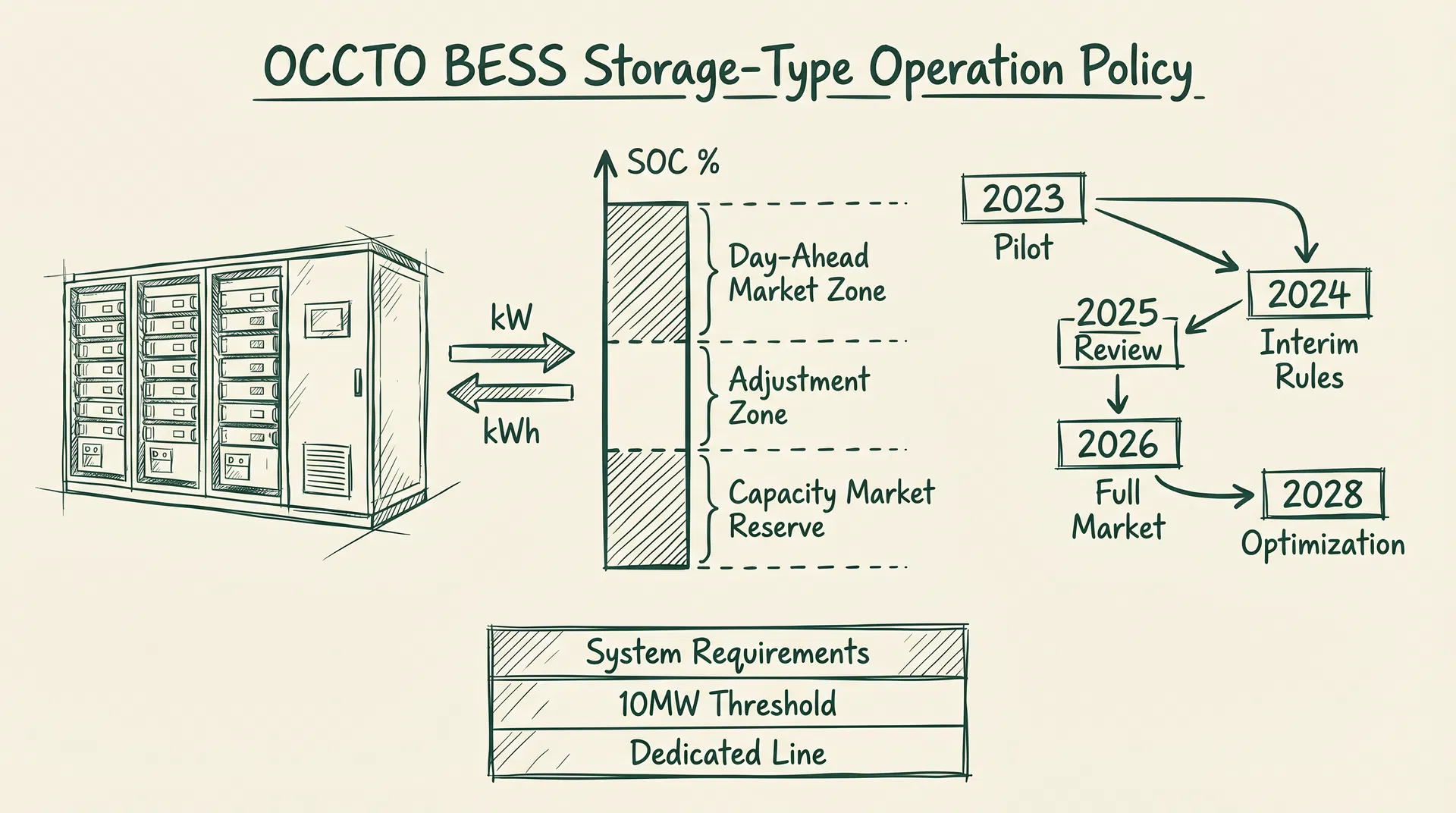
In January 2025, OCCTO formally proposed the "Storage-Type Operation" framework for battery energy storage systems at its 105th Adjustment Capacity Committee. Modeled after pumped hydro management, this framework requires TSO to monitor available discharge kWh in real time. This analysis examines the policy design logic, eligibility criteria, implications for SOC management strategy, and the practical significance of the central dispatch system upgrade timeline for BESS operators.

14min
Read Article
Share
Japan Additional Capacity Auction Complete Guide: Mechanism, Eligibility, Clearing, and Obligations
Policy & Regulation

Japan Additional Capacity Auction Complete Guide: Mechanism, Eligibility, Clearing, and Obligations

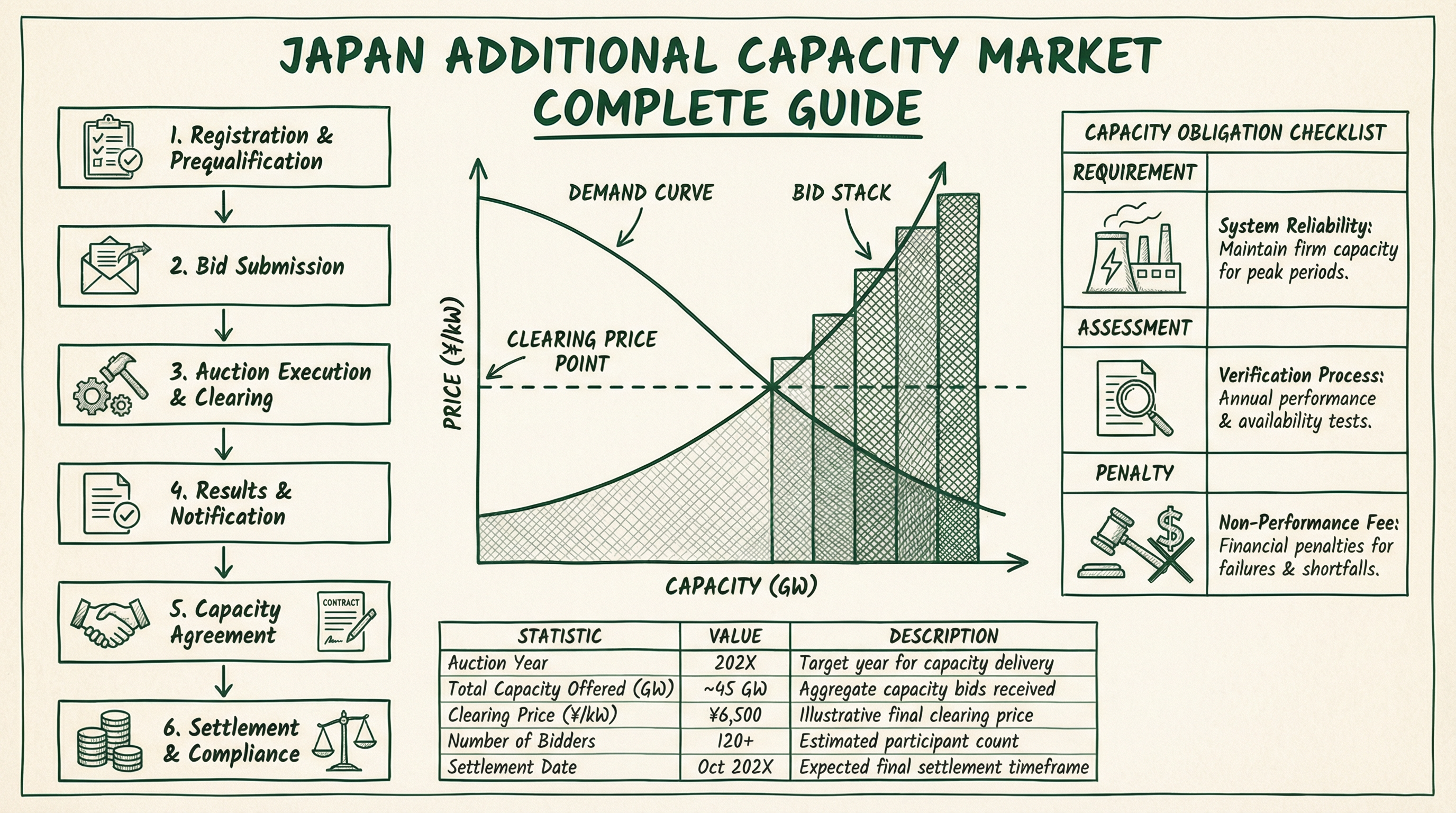
A comprehensive guide to Japan's Additional Capacity Auction (追加オークション): institutional design, eligibility requirements, expected capacity calculation, demand curve clearing mechanism, and capacity agreement performance obligations with penalties. Uses the FY2026 Additional Auction (delivery year: FY2027) as a case study with strategic implications for BESS developers.

20min
Read Article
Share
Latest Developments from Japan's Supply-Demand Adjustment Market Review Committee and Their Market Impact
Policy & Regulation

Latest Developments from Japan's Supply-Demand Adjustment Market Review Committee and Their Market Impact

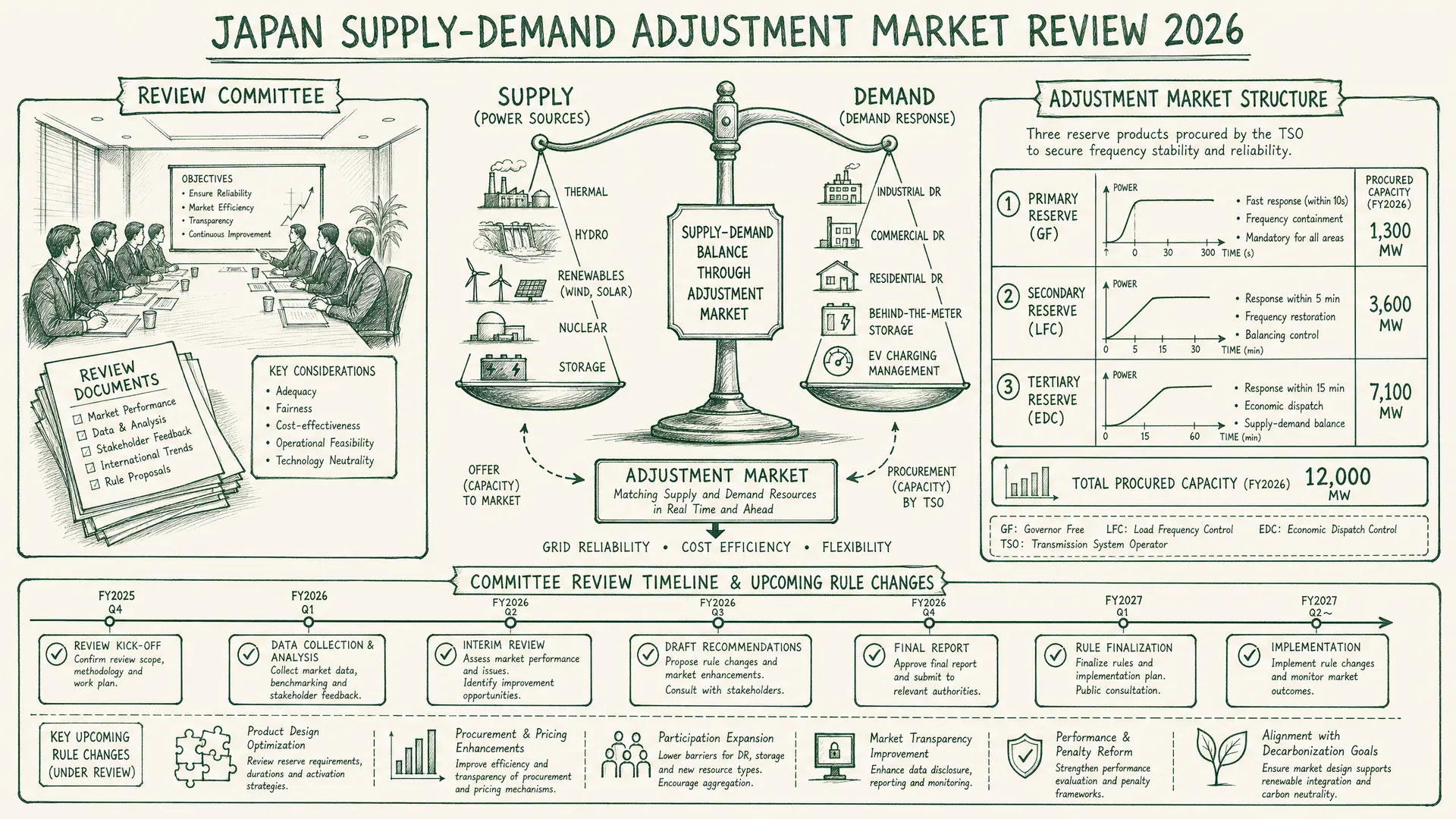
The Supply-Demand Adjustment Market Review Committee of Japan's Organization for Cross-regional Coordination of Transmission Operators (OCCTO) is actively pushing market reforms to enhance power system stability and efficiency. These changes are expected to have a profound impact on electricity traders, battery energy storage system (BESS) operators, and other market participants. This article delves into the policy background, key contents, and specific implications for market participants.

8min
Read Article
Share
EPRX Announcement: Impact of April 2026 Tertiary Reserve 2 Requirement and Reduction Factor Update on the Day-Ahead Market
Policy & Regulation

EPRX Announcement: Impact of April 2026 Tertiary Reserve 2 Requirement and Reduction Factor Update on the Day-Ahead Market

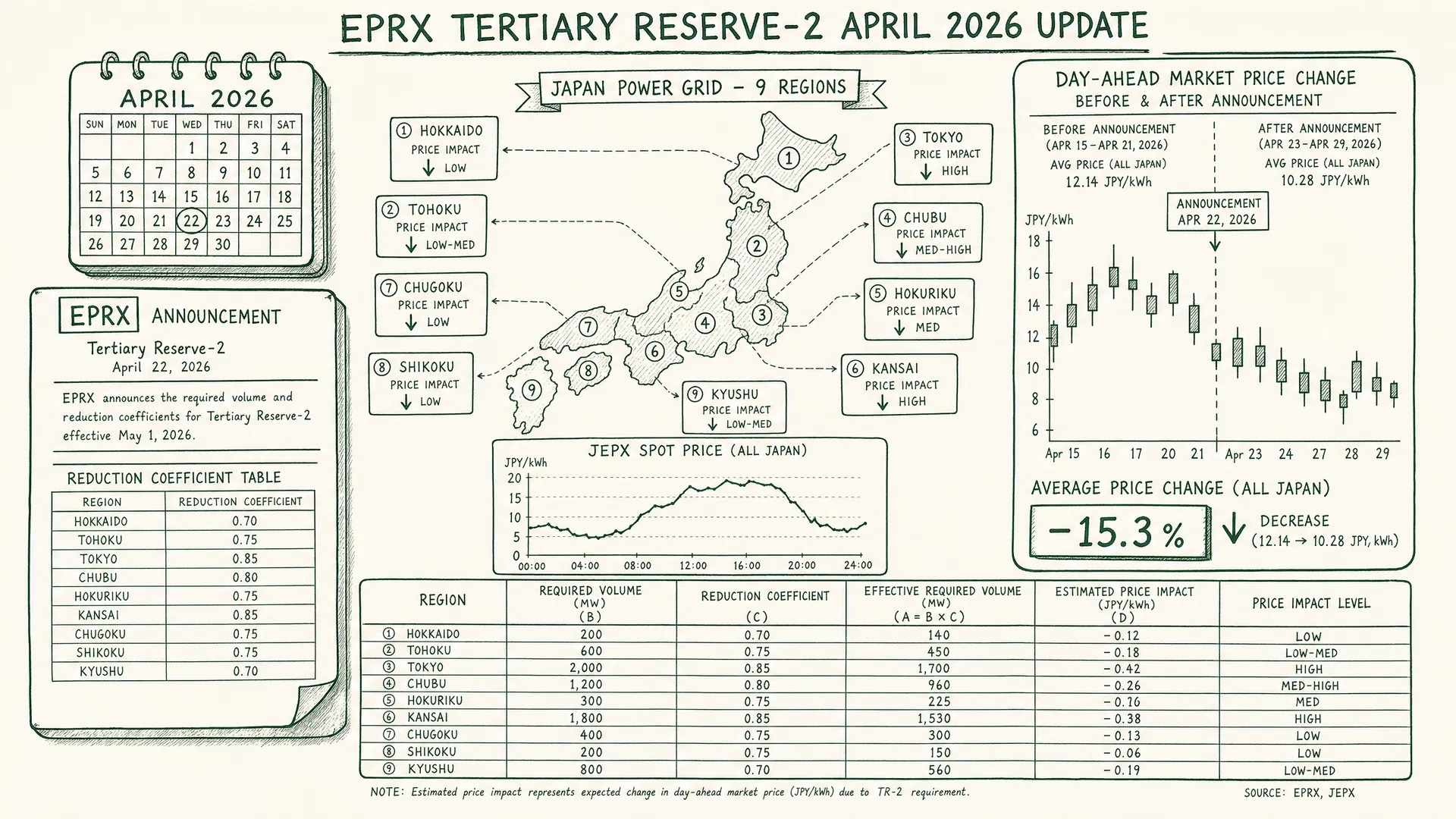
The Japan Electric Power Exchange (EPRX) has announced an update to the required volume and bidding reduction factor for Tertiary Reserve 2 for April 2026. This adjustment will directly influence the supply-demand balance and price formation in the electricity market, with its impact becoming particularly significant following the abolition of the weekly market and the transition to the day-ahead market on March 13, 2026.

8min
Read Article
Share
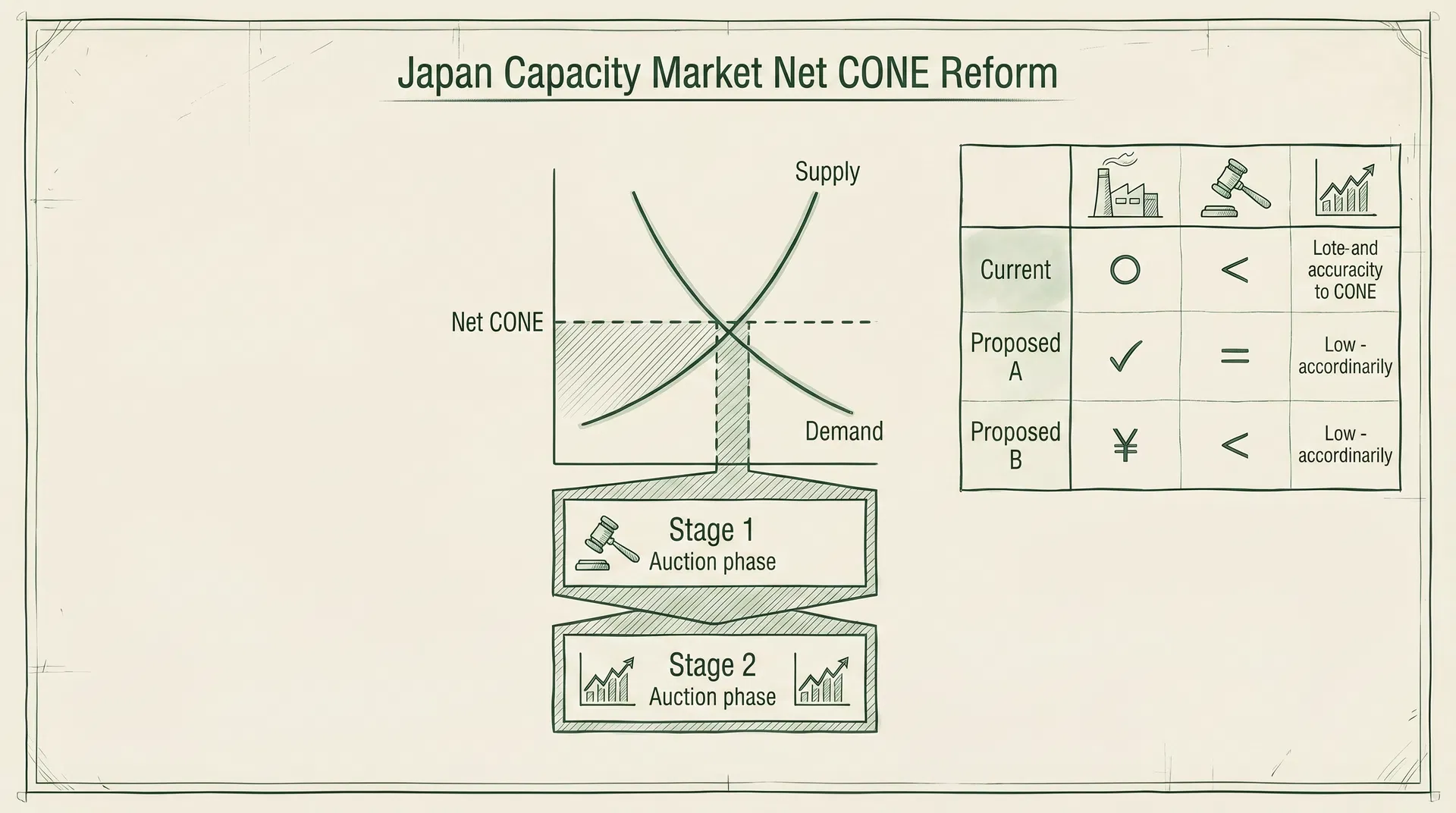
Japan's Capacity Market Reform: OCCTO Study Group's Impact on the Electricity Market
Policy & Regulation

Japan's Capacity Market Reform: OCCTO Study Group's Impact on the Electricity Market

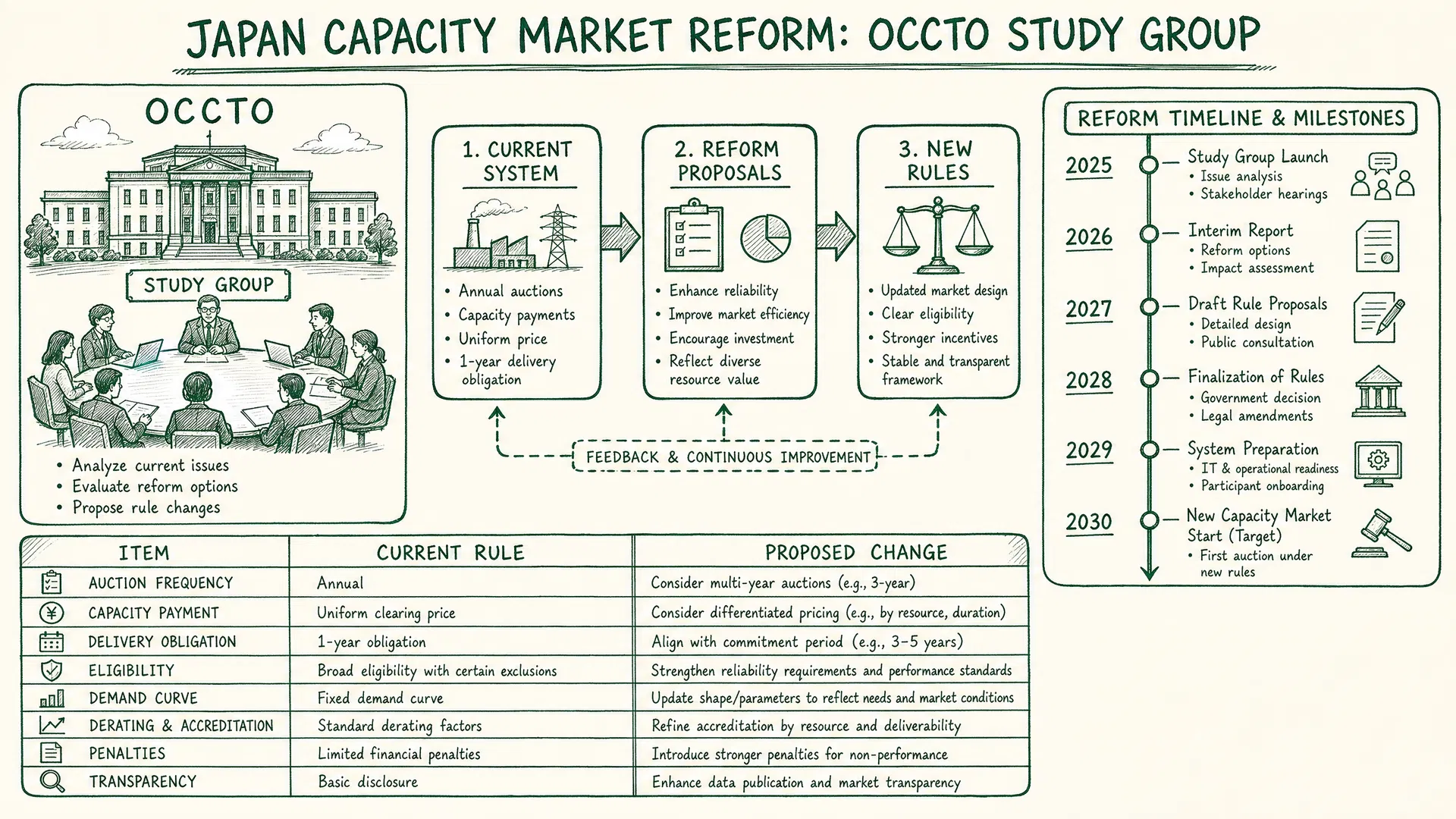
The Organization for Cross-regional Coordination of Transmission Operators (OCCTO) is deeply examining the future direction of Japan's capacity market to address increasing uncertainties in electricity supply and demand. This study group aims to review the current capacity market design and discuss how to ensure long-term electricity supply stability and efficiency. For electricity traders, BESS operators, and other market participants, these potential reforms signal significant strategic adjustments.

8min
Read Article
Share
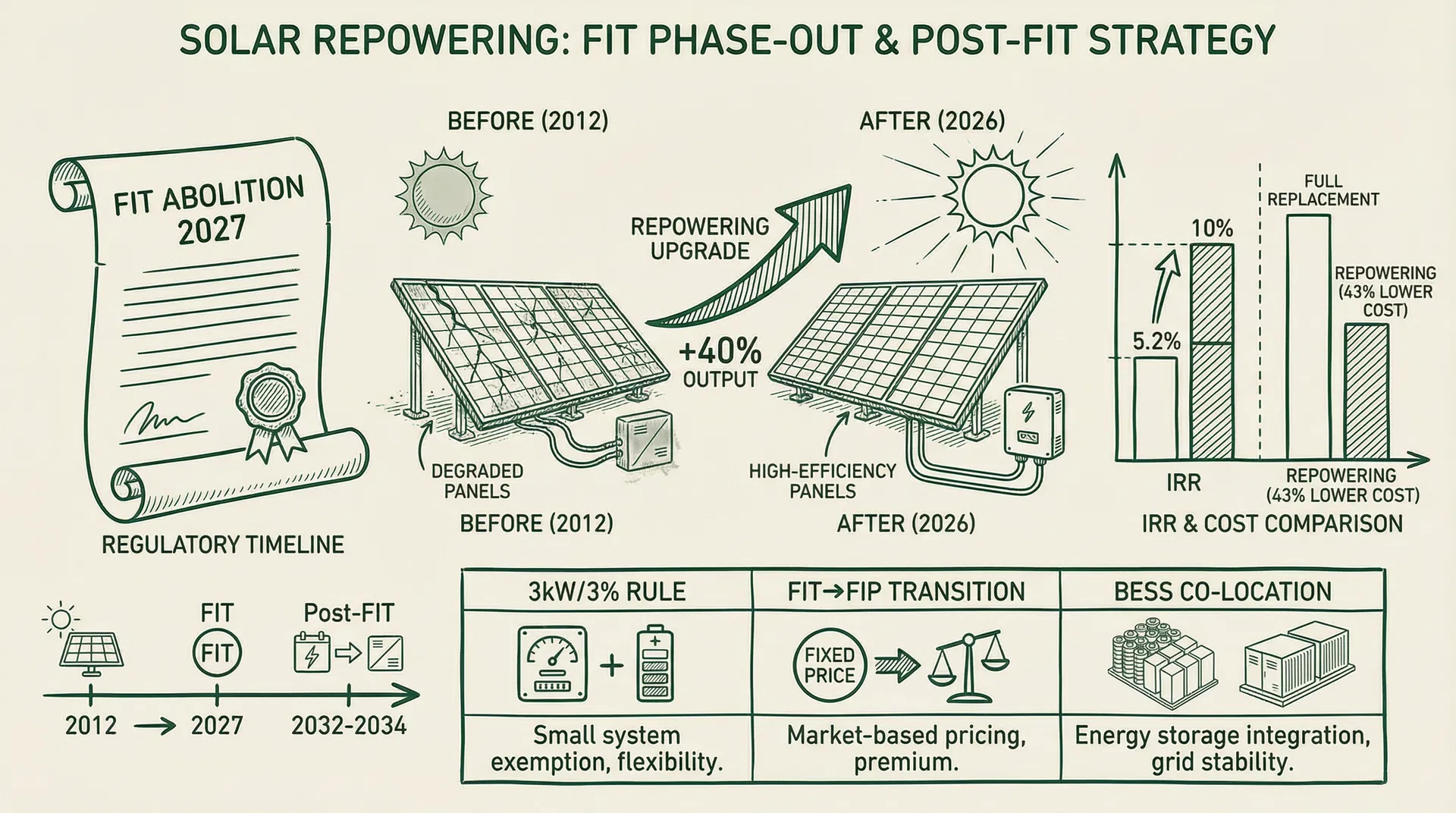
Japan Solar Repowering: Policy Shifts, Market Opportunity & Strategy After FIT Phase-Out
Policy & Regulation

Japan Solar Repowering: Policy Shifts, Market Opportunity & Strategy After FIT Phase-Out

METI's March 2026 decision to end FIT/FIP support for new ground-mounted solar from FY2027 reshapes Japan's solar landscape. Meanwhile, early FIT projects certified in 2012–2014 will reach their 20-year expiry in 2032–2034, unlocking tens of GW of repowering demand. This article covers the regulatory framework (the 3kW/3% rule), FIT-to-FIP transition strategy, BESS co-location benefits, and available subsidies.

15min
Read Article
Share
Tokyo's First Renewable Curtailment in March 2026: Data Analysis, Nuclear Impact, and Policy Contradictions
Policy & Regulation

Tokyo's First Renewable Curtailment in March 2026: Data Analysis, Nuclear Impact, and Policy Contradictions

On March 1, 2026, TEPCO Power Grid ordered its first-ever economic curtailment of renewable energy, cutting up to 1.84 GW of output. As Japan's largest grid joins every other regional market in experiencing curtailment, this analysis examines the official data, the role of nuclear restarts, and the structural challenges threatening Japan's 2040 renewable energy targets.

12min
Read Article
Share
Japan Imbalance Fee Unit Price: Principles, Calculation, and the 2026 Reform
Policy & Regulation

Japan Imbalance Fee Unit Price: Principles, Calculation, and the 2026 Reform

The imbalance fee (インバランス料金) is the core settlement mechanism underpinning Japan's simultaneous supply-demand balance requirement. This article examines its operating principles, the post-2022 calculation methodology, the policy rationale behind raising the corrected imbalance price cap (C value) from ¥200 to ¥300/kWh in April 2026, and how climate, electricity demand, and grid supply-demand dynamics collectively drive imbalance price volatility.

14min
Read Article
Share

Cookie Notice

This site uses cookies to remember your language preference and collect anonymous traffic statistics to improve our content. You can choose to accept or decline non-essential cookies. Learn more